August 1, 2015

EPA Announces Clean Air Act Proposals Targeting the Oil and Natural Gas Sector

Administrative Watch

The U.S. Environmental Protection Agency (EPA) recently unveiled a number of regulatory proposals aimed at reducing greenhouse gas emissions from the oil and natural gas industry and clarifying how sources in the industry are to be evaluated for air permitting purposes. These highly-anticipated proposals have the potential to affect sources located across various segments of the industry, including but not limited to operations at natural gas well sites, processing plants, compressor stations, and storage facilities. EPA is or will be accepting public comments on all of the proposals.

Read more.

July 10, 2015

Litigation challenges for the Appalachian Basin oil and gas industry

PIOGA Press

This article highlights an excerpt of the recently published 2015 Babst Calland Report – Appalachian Basin Oil and Gas Industry: Rising to the Challenge, Legal and Regulatory Perspective for Producers and Midstream Operators.

With a large number of regulatory and legal issues unresolved for the industry, litigation will remain part of the landscape. Industry will continue to be required to litigate interpretations of statutes and rules by federal and state regulators and environmental groups—with, we hope, favorable outcomes such as in Citizens for Pennsylvania’s Future v. Ultra Resources, Inc. Industry will also continue to face issues related to the validity of leases and royalty payments. Finally, property owner claims of both personal injury and property impact from oil and gas development activities will continue, fueled by claims of groundwater contamination and adverse health effects of shale development.

Federal court refuses to aggregate compressor stations, dismisses Clean Air Act Citizens’ suit alleging violation of new source review

In a highly-anticipated decision, the U.S. District Court for the Middle District of Pennsylvania granted a motion for summary judgment in favor of a Pennsylvania natural gas operator in an air aggregation case filed by a citizens group. The decision was issued on February 23 in Citizens for Pennsylvania’s Future, and is the latest development in the debate over single source determinations. The court agreed with the permitting decisions made by Department of Environmental Protection that the compressor stations at issue were not located on adjacent properties and thus should not be treated as a single source of emissions. The court disagreed with the Citizens for Pennsylvania’s Future’s (PennFuture) argument that the compressor stations were functionally interrelated and, therefore, should be aggregated as a single source.

July 7, 2015

Excessive Zoning and Land-Use Fees Subject to Legal Challenge: Land Use and Planning

The Legal Intelligencer

With a growing number of townships, boroughs and cities experiencing fiscal challenges, many municipalities have increased or are considering increasing their fees related to the administration of their zoning, subdivision and land development, and related ordinances as a means of generating additional revenue.

On one hand, it certainly is prudent for municipalities to examine and, where appropriate, to increase their fees to cover their actual administrative costs. However, they need to proceed cautiously when doing so. If the fees are not reasonably commensurate with the cost of services performed, they will be viewed as a “back-door tax” and be subject to legal challenge.

The Municipalities Planning Code, 53 P.S. Section 10101 et seq., which establishes the framework for zoning and land use regulation in Pennsylvania, expressly authorizes municipalities to charge fees in an amount sufficient to offset the costs borne by a municipality in processing and administering applications.

Specifically, the MPC authorizes municipalities to charge fees related to: (1) processing applications and reviewing plans filed under a subdivision and land-development ordinance, including fees to cover the “reasonable and necessary charges by [a] municipality’s professional consultants for review and report thereon”; (2) administering a zoning ordinance; and (3) conducting hearings before the zoning hearing board, including fees to cover the “compensation for the secretary and members of the zoning hearing board, notice and advertising costs and necessary administrative overhead connected with the hearing.”

A municipality’s authority to charge land-use permitting fees, however, is not without limitation. It is a well-settled principle of Pennsylvania law that these fees must be reasonable and commensurate with the cost of the services performed by the municipality. A party wishing to challenge a fee has at least two options.

July 1, 2015

U.S. Supreme Court Holds that EPA Must Consider Costs before Regulating Mercury Emissions from Power Plants

Administrative Watch

On June 29, 2015, the U.S. Supreme Court ruled in Michigan v. EPA that the U.S. Environmental Protection Agency (EPA) failed to properly consider compliance costs before promulgating the Mercury and Air Toxics Standards (MATS) rule for fossil fuel-fired power plants under Section 112 of the Clean Air Act (CAA). The Supreme Court’s decision could influence future EPA rulemakings and comes at a time when the agency is putting the final touches on a controversial suite of air regulations aimed at reducing carbon dioxide emissions from power plants.

Read more.

July 1, 2015

EEOC Rules Discrimination Based on Sexual Orientation is Sex Discrimination under Title VII

Employment Bulletin

Less than one month after the United States Supreme Court issued its landmark decision legalizing gay marriage nationwide, the U.S. Equal Employment Opportunity Commission (EEOC) issued a controversial interpretation in Complainant v. Anthony Foxx, Secretary, Department of Transportation (Federal Aviation Administration) in which it found that Title VII of the Civil Rights Act of 1964 prohibits discrimination based on an individual’s sexual orientation. The EEOC’s decision is a significant development in the law because it rejected several previous courts of appeals decisions holding that Title VII does not prohibit discrimination based upon sexual orientation. In this case, a supervisory air traffic control specialist with the Department of Transportation’s Federal Aviation Administration (FAA) filed an Equal Employment Opportunity (EEO) complaint alleging that the FAA subjected him to discrimination on the basis of sex. Specifically, the complainant alleged that he was discriminated against when he was denied a permanent position as a front line manager because he is gay. The EEO complaint was initially dismissed on timeliness grounds. The complainant appealed the dismissal to the EEOC, which reversed, concluding that the complainant’s allegations of discrimination on the basis of his sexual orientation stated a claim of discrimination on the basis of sex within the meaning of Title VII, and that such claim was timely. In light of its conclusion, the EEOC remanded the case for a decision on the merits.

Read more.

June 25, 2015

New Charleston Location

The State Journal

With a growing team of attorneys and client base, Babst Calland has moved to a new location at BB&T Square in Charleston, WV’s downtown business district.

“Our team of West Virginia attorneys welcomes the move to BB&T Square in the center of our beautiful downtown district,” said Steven Green, shareholder and energy attorney at Babst Calland. “The new space will accommodate our continued growth while enabling our entire staff to better serve current and new clients.”

Babst Calland opened its Charleston office in 2011, initially serving clients in the growing natural gas market in West Virginia and the Appalachian Basin. The office has grown steadily since then, and last year added a team of senior West Virginia attorneys in lateral moves from two other local firms. The firm focuses on representing clients through a multi-disciplinary team approach with attorneys in key practice areas, including energy and natural resources, environmental, employment and labor, business services, title, litigation, land use, and construction law.

The firm has more than 30 attorneys admitted to practice in West Virginia who have been serving the natural gas, coal and other industries for many years.

Its new Charleston office is located at 300 Summers St., Suite 1000.

Babst Calland also has offices in Pittsburgh and State College, PA., as well as Canton, Oh and Sewell, N.J.

June 14, 2015

Energy Spotlight: Jay Hammond

Pittsburgh Tribune Review 

In a depressed natural gas market in which every dollar counts for drillers, Jay Hammond tries to help people make deals efficiently.

The attorney joined Downtown Pittsburgh-based Babst Calland last month and advises energy companies on transactions including leasing, joint venture agreements, and mergers and acquisitions.

Read more.


June 12, 2015

2015 Babst Calland Report

U.S. remained world’s largest producer of petroleum and natural gas hydrocarbons in 2014.
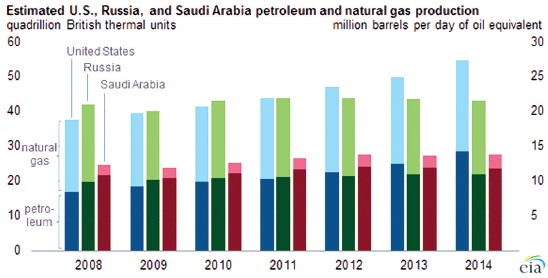
PITTSBURGH, PA, June 12, 2015 – The law firm of Babst Calland today released its fifth annu­al energy industry report called, “The 2015 Babst Calland Report – Appalachian Basin Oil and Gas Industry: Rising to the Chal­lenge; Legal and Regulatory Perspective for Producers and Midstream Operators.” This annual review of energy and natural resources development activity acknowl­edges the continuing evolution of this in­dustry in the face of economic, regulatory, legal and local government challenges.

In this report, Babst Calland attorneys provide insights into Marcellus and Utica shale issues, challenges and recent devel­opments most relevant to Pennsylvania, Ohio and West Virginia. In general, a sig­nificant challenge ahead for shale devel­opers in the current price environment is for operators to continue to be productive and active in finding land and drilling wells while effectively delivering the natural re­source to market.

According to the U.S. Energy Informa­tion Administration, regional and national natural gas production reached an all-time high at the end of 2014. Thus far in 2015, the oil and gas industry’s rig count in the Appalachian Basin and elsewhere is down substantially compared to the previous two years. Although Marcellus shale devel­opment is leading the way in the U.S. natu­ral gas production by producing 17 million cubic feet per day of gas, persistently low gas prices are forcing producers to curtail capital expenditures, adjust staffing and wring cost savings from their respective supply chains.

Joseph K. Reinhart, shareholder and co- chair of Babst Calland’s Energy and Natu­ral Resources Group, said, “This Report identifies the many challenges faced by the oil and gas industry, including commod­ity pricing, efforts to impose or increase taxes, pipeline capacity, vocal opposition, environmental and litigation challenges, impacts of local regulation, and the grow­ing importance of due diligence in asset transactions.”

The 44-page Report contains five sec­tions, each addressing key challenges for Appalachian Basin oil and gas producers and midstream operators.

June 5, 2015

Maximizing the Marcellus Shale: Benefits of Shallow Well Pooling

West Virginia Executive

Despite the state legislature’s efforts, laws in West Virginia that allow pooling exclude shallow horizontal wells. Since wells drilled in the Marcellus Shale are considered shallow, creating a shallow pooling law may be the key to maximizing the state’s shale development.

Read more.


June 4, 2015

Law firm: Pa. municipalities becoming more aggressive in attemps to regulate gas industry

PIttsburgh Business Times

As a result of a Pennsylvania Supreme Court decision, municipalities are adopting a greater number of ordinances that impact oil and gas operations, according to a new report by Pittsburgh law firm Babst Calland.

“Local governments are adopting, at an accelerated pace, ordinances that regulate the oil and gas industry’s operations, sometimes in a very aggressive and restrictive fashion,” the firm, which tracks local rule-making, said in the report.

Read more.

June 1, 2015

OSHA expands the Severe Violator Enforcement Program to include oil and gas operations

The PIOGA Press

On February 11, the Occupational Safety and Health Administration (OSHA) issued a memorandum to all OSHA regional directors and state plan designees authorizing the addition of upstream oil and gas hazards to the list of high-emphasis hazards in the Severe Violator Enforcement Program (SVEP). This policy change is significant because
it permits OSHA to concentrate resources and enforcement efforts on oil and gas employers any time an incident meets the SVEP criteria.

Read more.

June 1, 2015

Individual, Collective and Class Action Suits Alleging Misclassification of Oil and Gas Industry Workers Flood the Dockets

Employment Bulletin

Individual, collective and class action lawsuits alleging misclassification of oil and gas industry employees under federal and state wage hour laws have flooded the Pennsylvania and Ohio dockets. This is occurring approximately two and a half years after the United States Department of Labor (DOL) prioritized an ongoing multi year enforcement initiative under the Fair Labor Standards Act (FLSA). By December 2014, this initiative resulted in more than 5,300 oil and gas industry employees recovering nearly $4.5 million in back wages for unpaid overtime and other wage violations.

Read more.

May 31, 2015

Failing to properly calculate overtime payments on day rates and bonus payments could lead to significant liability

The PIOGA Press

Recently, the United States Department of Labor (DOL) announced that it has helped more than 5,300 oil and gas workers recover nearly $4.5 million in back wages for unpaid overtime and other wage violations as a result of an “ongoing multiyear enforcement initiative” conducted by the DOL’s Wilkes-Barre and Pittsburgh Wage and Hour Division offices which found significant violations of the Fair Labor Standards Act (FLSA). The DOL found that the majority of the FLSA violations were due to improper payment of overtime. In many cases, employee’s production bonuses were not included in their “regular rate” of pay. In other cases, employers failed to pay overtime to employees that were paid day rates. The DOL attributed the wage violations in part to the structure of the oil and gas industry in Pennsylvania and West Virginia. According to the DOL, job sites “that used to be run by a single company can now have dozens of smaller contractors performing work, which can create downward economic pressure on lower level subcontractors,” which can lead to noncompliance with wage and hour laws and regulations.

Read more.

May 28, 2015

EPA Issues New Rule on Definition of Waters of the United States

Administrative Watch

On May 27, 2015, the United States Environmental Protection Agency (EPA) and the United States Army Corps of Engineers (Corps) released the long-awaited final rule redefining the extent of the agencies’ jurisdiction over “waters of the United States” (WOTUS) under the Clean Water Act. The Final Rule, known as the “Clean Water Rule,” abruptly changes (i.e., within 60 days of publication in the Federal Register) the types of waters that will be regulated under numerous federal programs, including NPDES permitting, wetland and watercourse (i.e., dredge and fill) permitting, spill response planning, and spill reporting. The Final Rule will affect all types of industries, real estate development, construction activities, and other entities by increasing the types and extent of waters that will be regulated under the Clean Water Act and introducing a new analysis for evaluating whether a water is jurisdictional.

Read more.

May 22, 2015

Charleston Area Alliance Excited to Announce Newest Member

Charleston Area Alliance

We would like to send out a warm welcome to our newest member of the Alliance, Babst Calland Clements & Zomnir, P.C.

Babst Calland is one of the most respected top-tier law firms in the mid-Atlantic United States. Their attorneys have the knowledge and experience needed to solve complex legal problems for corporations, private companies and organizations of all types. Babst Calland attorneys deliver a broad range of quality legal services, responding quickly and efficiently to answer questions and solve problems and litigate issues in federal state courts and before administrative tribunals. Babst Calland’s Charleston, WV office handles a wide range of legal issues that include a particular focus on natural gas and other energy related issues, as well as environmental, business services, title, litigation, land use, construction, and employment and labor law. Babst Calland just moved to their new office centrally located in the BB&T building in Downtown Charleston.

Read more.


Top