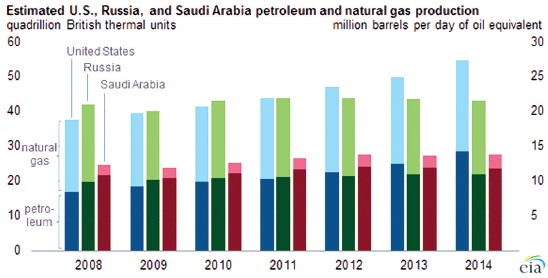
U.S. remained world’s largest producer of petroleum and natural gas hydrocarbons in 2014.
 PITTSBURGH, PA, June 12, 2015 – The law firm of Babst Calland today released its fifth annual energy industry report called, “The 2015 Babst Calland Report – Appalachian Basin Oil and Gas Industry: Rising to the Challenge; Legal and Regulatory Perspective for Producers and Midstream Operators.” This annual review of energy and natural resources development activity acknowledges the continuing evolution of this industry in the face of economic, regulatory, legal and local government challenges.
In this report, Babst Calland attorneys provide insights into Marcellus and Utica shale issues, challenges and recent developments most relevant to Pennsylvania, Ohio and West Virginia. In general, a significant challenge ahead for shale developers in the current price environment is for operators to continue to be productive and active in finding land and drilling wells while effectively delivering the natural resource to market.
According to the U.S. Energy Information Administration, regional and national natural gas production reached an all-time high at the end of 2014. Thus far in 2015, the oil and gas industry’s rig count in the Appalachian Basin and elsewhere is down substantially compared to the previous two years. Although Marcellus shale development is leading the way in the U.S. natural gas production by producing 17 million cubic feet per day of gas, persistently low gas prices are forcing producers to curtail capital expenditures, adjust staffing and wring cost savings from their respective supply chains.
Joseph K. Reinhart, shareholder and co- chair of Babst Calland’s Energy and Natural Resources Group, said, “This Report identifies the many challenges faced by the oil and gas industry, including commodity pricing, efforts to impose or increase taxes, pipeline capacity, vocal opposition, environmental and litigation challenges, impacts of local regulation, and the growing importance of due diligence in asset transactions.”
The 44-page Report contains five sections, each addressing key challenges for Appalachian Basin oil and gas producers and midstream operators. …