 In her recent article Right-To-Know Law Policy Update in the Wake of Anonymous FOIA Buddy Record Requests with Max Junker, Anna Hosack provides a Right-to-Know Law Policy Update in Wake of Anonymous FOIA Buddy Record Requests. To view the full article, click here.
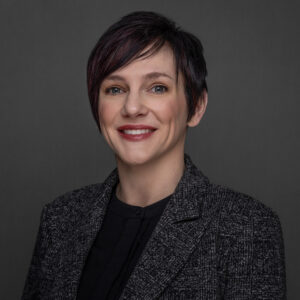 In her recent article Data Privacy: A Friend or Foe of Artificial Intelligence, Kristen Petrina discusses AI development and what organizations should consider before implementing AI into its processes. To read the full article, click here.
Eight Babst Calland women lawyers were selected for inclusion in the 2025 edition of The Best Lawyers in America®, the most respected peer-reviewed publications in the legal profession:
- Lisa Bruderly – Environmental Law
- Kathy K. Condo – Commercial Litigation, Energy Law
- Julie R. Domike – Environmental Law, Litigation – Environmental
- Jennifer Hicks – Commercial Litigation and Energy Law
- Justine Kasznica – Corporate Law
- Christina Manfredi McKinley – Commercial Litigation
- Jean M. Mosites – Energy Law, Environmental Law
- Laura Stone – Corporate Law
View the award recipients here.
Seven Babst Calland women lawyers were also named to the 2025 Best Lawyers: Ones to Watch® in America which recognizes associates and other lawyers who are earlier in their careers for their outstanding professional excellence in private practice in the United States:
- Susanna Bagdasarova – Corporate Law
- Mary H. Binker – Corporate Law, Energy Law, Real Estate Law
- Gina Falaschi Buchman – Environmental Law
- Carla M. Castello – Commercial Litigation, Litigation – Labor and Employment, and Mass Tort Litigation / Class Actions – Defendants
- Alexandra G. Farone – Commercial Litigation, Litigation – Labor and Employment
- Alyssa Golfieri – Land Use and Zoning Law, Municipal Law
- Jennifer L. Malik – Land Use and Zoning Law, Municipal Law
View the award recipients here.
Best Lawyers undergoes an authentication process, and inclusion in The Best Lawyers in America® is based solely on peer review and is divided by geographic region and practice areas. The list has published for more than three decades, earning the respect of the profession, the media, and the public as the most reliable, unbiased source of legal referrals. Its first international list was published in 2006 and since then has grown to provide lists in over 65 countries.

In her recent article Pennsylvania’s Carbon Capture and Sequestration Act of 2024 with Kevin Garber and Sean McGovern, Gina Buchman discusses the Carbon Capture and Sequestration Act and the three key aspects – pore space ownership, permitting and operating an injection and storage facility, and liability and long-term responsibility for sequestered CO2. The Act was signed into law , effective immediately on July 17, 2024. To read the full article, click here.
 In her recent article Best Practice for Conducting an Effective Internal Company Investigation with Kevin Douglass and Steve Antonelli, Carla Castello gives insights on conducting an effective internal company investigation when faced with allegations. To read the full article, click here.
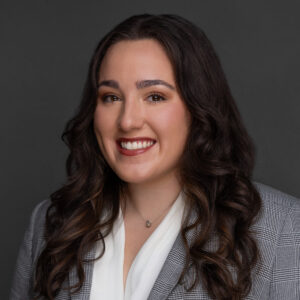 In her recent article Press Pause: SCOTUS Says an Appeal of Denied Request to Compel Arbitration Must Stay Case Alexandra Graf discusses the recently decided U.S. Supreme Court case Coinbase, Inc. v. Bielski, 216 L.Ed.2d 671 (2023). Prior to the decision, there was a circuit split as to whether an interlocutory appeal of a denied motion to compel arbitration forces the district court to stay the underlying proceedings. To read the full article, click here.
PFAS, known as “forever chemicals” due to their persistence in the environment, have been manufactured and used in a variety of industries for nearly 80 years. Following decades of concerns with human health effects and environmental contamination, the U.S. Environmental Protection Agency (EPA) laid out its PFAS Strategic Roadmap. This spring, the EPA finalized two of the most significant measures described in its PFAS Roadmap. Environmental Attorneys Jean Mosites, Sloane Anders Wildman and Amanda Brosy discuss the regulations developed under the EPA’s PFAS Roadmap that go beyond PFOA and PFOS, inviting scrutiny by the public, regulated entities, and various stakeholders. As the science proceeds and the EPA implements the actions outlined in its PFAS Roadmap, the PFAS regulatory environment will remain uncertain, and additional litigation will follow. To view the full article, click here.

Jean Mosites

Amanda Brosy

Sloane Anders Wildman
On July 17, 2024, Governor Josh Shapiro signed the Carbon Capture and Sequestration Act into law, effective immediately. This comprehensive new statute positions Pennsylvania to join a growing list of states, including North Dakota, Wyoming, Indiana, and West Virginia, that promote underground storage of carbon dioxide. In this Alert, Attorney Gina Falaschi Buchman along with Kevin Garber and Sean McGovern discuss the Act’s authorization of underground injection and sequestration of CO2, and its three key aspects – pore space ownership, permitting and operating an injection and storage facility, and liability and long-term responsibility for sequestered CO2. To read the full alert, click here.
 In her blog in the PA Chamber’s Business Blog, The Current, Christina Manfredi McKinley discusses a number of decisions handed down by the U.S. Supreme Court this past term, which, individually and collectively, have the potential to reshape the administrative state as we know it, and create both significant opportunities and corresponding risks, particularly for businesses, often subject to federal regulations. Christina will be a panelist during the the PA Chamber of Business and Industry‘s webinar on July 31, 2024, addressing the effect on the business community of three significant administrative law cases from the Supreme Court’s recently concluded term: Loper Bright, Corner Post, and Ohio v. EPA.
 Attorney Jenni Hicks will serve as a conference co-chair for the 15th Appalachia Energy Law Conference (f/k/a Law of Shale Plays Conference), September 4-5, 2024. Focused on legal issues related to onshore energy production, primarily oil and gas production in Appalachia, this conference brings together clients, attorneys, professional landmen, and other professionals to learn and discuss important cases, concepts, and trends. In addition, the conference features multiple networking opportunities with other attendees. For more information, click here.
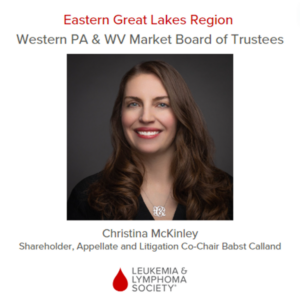 Babst Calland Attorney Christina Manfredi McKinley was recently elected to the Pittsburgh Board of Trustees of The Leukemia & Lymphoma Society Eastern Great Lakes Region. She will serve a three-year term beginning July 1, 2024.
“I’m honored to serve on the Pittsburgh Board of Trustees and am thrilled to be a part of the team. I look forward to supporting LLS in its mission to find cures and ensure patients can access the lifesaving treatments they need,” said Ms. McKinley.
According to Tina Thompson, Region Executive Director for The Leukemia & Lymphoma Society – Eastern Great Lakes Region, “Volunteer leaders like Christina help LLS advance our mission and change the landscape for all cancer patients and are a crucial link in our efforts to cure blood cancers and improve the quality of life of our patients and their families.”
 In their recent article MindShare: Navigate the Current Uncertainty on FinCEN Matters with Chris Farmakis and Dane Fennell, Susanna Bagdasarova and Kate Cooper discuss the U.S. Department of the Treasury’s Financial Crimes Enforcement Network (FinCEN) Beneficial Ownership Information Reporting Rule under the Corporate Transparency Act (CTA), and what this means to businesses, and what every entity organized under U.S. law or registered to do business in the U.S. will need to determine. To read the full article, click here.
 Attorney Christina McKinley will be a presenter for the PA Chamber of Business and Industry’s Government Affairs Webinar: “What Every Business Needs to Know About Recent SCOTUS Rulings” on Wednesday, July 31, 2024.The Supreme Court of the United States (SCOTUS) recently issued several major decisions that will have profound impacts on the business community. From the elimination of “Chevron Deference” to other landmark rulings curtailing the power of federal regulators, SCOTUS has realigned the separation of powers to restrict the administrative state. What does this mean for your business and the future of federal rulemaking? For more information, click here.
 This is the fourth in a series of profiles featuring the women attorneys of Babst Calland to acknowledge and celebrate their success and to connect women attorneys across the Firm’s practice groups, offices and clients. This attorney spotlight features Sloane Anders Wildman.
To view the profile on Sloane, click here.
 In her recent article In Memoriam: The Modern Administrative State (1984-2024) with Joseph Shaeffer, Jessica Deyoe gives her analysis of the United States Supreme Court’s overruling of Chevron U.S.A. Inc. v. Natural Resources Defense Council, Inc. They concluded, “Though much about the post-Chevron landscape remains to be determined, the courts now have a much larger role in saying what the law is—not only at the interpretative stage under Loper Bright but also at the enforcement stage under Jarkesy.” To read the full article, click here.