

Meghan S. Mesojedec recently joined Babst Calland’s Pittsburgh, Pa. office as an associate in the Corporate and Commercial Group. Ms. Mesojedec focuses primarily on corporate, real estate and transactional matters, including mergers and acquisitions, commercial contracts, and the acquisition, disposition, and leasing of various asset types.
Prior to joining the Firm, Ms. Mesojedec was an associate with Metz Lewis Brodman Must O’Keefe LLC. …
 AI meeting assistants offer numerous benefits, including allowing participants who would otherwise be taking notes to stay fully engaged, automatically generating meeting summaries and action items, producing uniform and unbiased notes for all participants, and even identifying speakers by their voices. But what many users do not fully appreciate is that these tools introduce a third party into conversations historically governed by strict privacy and confidentiality rules, a shift that carries profound consequences for attorney–client privilege, wiretap compliance, compliance with privacy laws, Pennsylvania’s Right to Know Law (RTKL), and discovery exposure.
  In response to President Trump’s Executive Order 14179, “Removing Barriers to American Leadership in Artificial Intelligence (AI),” EPA announced this week a new EPA webpage dedicated to compiling agency resources related to the Clean Air Act requirements potentially applicable to the development of data centers and AI facilities across the United States. The webpage, Clean Air Act Resources for Data Centers, is intended to promote transparency by aiding developers and other interested parties in locating various agency resources, including Clean Air Act regulations, interpretative guidance, and technical tools, that may assist with Clean Air Act permitting and air quality modeling during project development.
  When can an employee hold its employer liable for harassment by a third-party? In her recent article in The Legal Intelligencer,


 On November 10, 2025, EPA announced a proposed revision to regulations issued under Toxic Substances Control Act (TSCA) Section 8(a)(7), which would reduce certain per and polyfluoroalkyl substance (PFAS) reporting requirements for manufacturers and importers. Babst Calland’s Environmental Practice attorneys are closely tracking EPA’s PFAS actions, and our attorneys are available to provide strategic advice on how developing PFAS regulations may affect your business. For more information or answers to questions, please contact
  Babst Calland is pleased to announce the addition of Morgan Hubbard, an associate in the Pittsburgh office.
 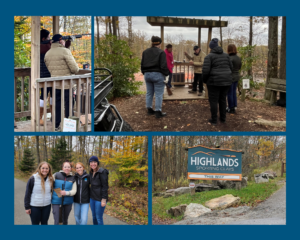 Babst Calland’s Women’s Initiative recently hosted an Instructional Sporting Clays Event at Highlands Sporting Clays, bringing together clients and women attorneys for a fun and empowering afternoon of learning, networking, and camaraderie.
 Social media has become the modern town square for many public officials. Whether it’s sharing a recap of a school board meeting, celebrating a community event, or commenting on local issues, platforms like Facebook and Instagram are now a routine part of how leaders connect with their constituents. But what happens when those online conversations intersect with Pennsylvania’s Right-to-Know Law? To read the full article by
  The U.S. Department of Transportation issued an Interim Final Rule effective October 3, 2025, instituting an immediate and significant change for the qualification of women- and minority-owned businesses in the DOT’s Disadvantaged Business Enterprise (DBE) and Airport Concessions Disadvantaged Business Enterprise (ACDBE) Program. For purposes of the DBE/ACDBE program, women- and minority-owned businesses were historically presumed to be disadvantaged, automatically meeting one of the requirements for DBE status; this is no longer the case.