
On November 17, 2025, the U.S. EPA and Army Corps of Engineers proposed a revised definition of “waters of the United States” under the Clean Water Act. The Trump administration announced that the Proposed Rule would “provide greater regulatory certainty and increase Clean Water Act program predictability and consistency.” If you have any questions or would like any additional information on the Proposed Rule and WOTUS developments or the Clean Water Act, in general, and the impacts on your business, please contact Lisa Bruderly or Ethan Johnson. To read the full alert, click here.

There has been much talk within the oil and gas industry about the potential for lithium extraction from produced water, a waste byproduct produced during hydraulic fracturing and drilling. Is this only talk, or are we approaching another extraction revolution? The answer is that the revolution is knocking on the door, but there remain significant practical and legal hurdles to overcome. To become viable, lithium extraction must become both economically and environmentally sustainable. Thus far, these technologies have not proven to be economically scalable, nor could their environmental impacts be justified. Read the full article here by Katerina Vassil and Steve Silverman.

On November 12, 2025, Governor Josh Shapiro signed House Bill 416, a Fiscal Code Bill and a segment of the Pennsylvania budget package for Fiscal Year 2025-26. The Fiscal Code has several important implications for industry regulation, including the abrogation of the Regional Greenhouse Gas Initiative (RGGI) regulations, permitting relief through expedited review schedules for certain air and water general permits, and provisions to ensure grid reliability. The alert by Environmental Attorneys Kevin Garber and Alexandra Graf addresses these implications of the 2025 Fiscal Code. To view the full alert, click here.
 On November 10, 2025, EPA announced a proposed revision to regulations issued under Toxic Substances Control Act (TSCA) Section 8(a)(7), which would reduce certain per and polyfluoroalkyl substance (PFAS) reporting requirements for manufacturers and importers. Babst Calland’s Environmental Practice attorneys are closely tracking EPA’s PFAS actions, and our attorneys are available to provide strategic advice on how developing PFAS regulations may affect your business. For more information or answers to questions, please contact Sloane Anders Wildman or Ethan Johnson. To read the full alert, click here.
On October 24, 2025, the Albany County Supreme Court issued a decision and directed the New York State Department of Environmental Conservation (DEC) to issue regulations to meet the emissions reduction mandates pursuant to the State’s 2019 Climate Leadership and Community Protection Act (CLCPA). Babst Calland continues to track climate change legislation and litigation, as well as federal and state regulatory developments. For more information on this and other climate change-related matters, please contact Polly Hampton, Gina Falaschi Buchman or Jordan Brown or any of our other environmental attorneys. To view the full alert, click here.

 Babst Calland is pleased to announce the addition of Morgan Hubbard, an associate in the Pittsburgh office. Morgan Hubbard joins the Corporate and Commercial Group and focuses her practice primarily on corporate and transaction matters, including commercial contracts, corporate structuring, mergers and acquisitions. She is a 2025 graduate of the University of Pittsburgh School of Law.
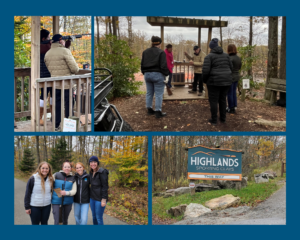 Babst Calland’s Women’s Initiative recently hosted an Instructional Sporting Clays Event at Highlands Sporting Clays, bringing together clients and women attorneys for a fun and empowering afternoon of learning, networking, and camaraderie.
Participants — from first-time shooters to seasoned enthusiasts — enjoyed a hands-on tutorial on gun safety, received expert guidance from Highlands’ outstanding trappers, and shot through 7 stations for a total of 50 clays each.
A big thank you to everyone who joined us for this unique event that combined skill-building, teamwork, and connection in a beautiful outdoor setting.
 Social media has become the modern town square for many public officials. Whether it’s sharing a recap of a school board meeting, celebrating a community event, or commenting on local issues, platforms like Facebook and Instagram are now a routine part of how leaders connect with their constituents. But what happens when those online conversations intersect with Pennsylvania’s Right-to-Know Law? To read the full article by Anna Hosack, Stephen Korbel, and Peter Zittel, click here.
 The U.S. Department of Transportation issued an Interim Final Rule effective October 3, 2025, instituting an immediate and significant change for the qualification of women- and minority-owned businesses in the DOT’s Disadvantaged Business Enterprise (DBE) and Airport Concessions Disadvantaged Business Enterprise (ACDBE) Program. For purposes of the DBE/ACDBE program, women- and minority-owned businesses were historically presumed to be disadvantaged, automatically meeting one of the requirements for DBE status; this is no longer the case. To remain in the program, all DBE/ACDBE certified businesses owners must be reevaluated for disadvantaged status. For more information about the DBE/ACDBE program, and how these requirements affect your business. To view the full article by Alex Farone and Janet Meub, click here.

On October 2, 2025, the EPA published a Proposed Rule and a companion Direct Final Rule to extend certain compliance deadlines for effluent limitations guidelines for the Steam-Electric Power Generating point source category in the Federal Register. EPA states that the proposal seeks to advance the goals of the Trump administration’s Unleashing American Energy Executive Orders and provide reliable energy as demand increases due to the rise of AI and data centers. The comment periods on Proposed Rule and Direct Final Rule close on November 3, 2025. Additionally, EPA is hosting a webinar on the rule package on October 14, 2025. Babst Calland attorneys continue to track these developments and are available to assist with CWA-related matters. To read the full alert by Mackenzie Moyer, Ben Clapp, and Gary Steinbauer, click here.
Municipal Attorneys Betsy Dupuis and Morgan Madden will present “Who, What, When, and Why of Authority Rules and Regulations” to the Pennsylvania Municipal Authorities Association on Wednesday, October 15, 2025. Most municipal authorities in the Commonwealth have some iteration of rules and regulations to govern and guide the use of equipment, services provided, and authority-owned facilities. Sometimes these regulations simply cover the basics including fees for tapping, services, etc., and yet other municipalities have more robust regulations that dictate, for example, how repairs are to be completed and who is responsible for costs associated with the same. As a general rule, authorities should regularly review their rules and regulations and ensure that those rules and regulations are sufficient and enforceable based upon current operations and services, and ensure both the system and the authority are protected from unauthorized actors and a constantly evolving legal and regulatory landscape. This presentation will discuss the source of municipal authorities’ authority, the framework within which municipal authorities can and should develop rules and regulations and further discuss basics and best practices for promulgating and enforcing sensible authority rules and regulations. For more information, click here.

Betsy Dupuis

Morgan Madden
 Recent activity from the FTC indicates yet another shift in the Commission’s view on non-compete agreements, the latest in a turbulent 16-month period for this topic that began with the FTC’s May 2024 publication of a final rule banning most non-competes throughout the country. In their article, FTC Withdraws Non-Compete Appeal, Previews a More Focused Approach, Steve Antonelli and Alex Farone discuss the rule and its implications, encouraging employers to continue to monitor the latest developments involving non-compete agreements. To read the article, click here.
On September 17, 2025, EPA announced that it will retain the Comprehensive Environmental Response, Compensation, and Liability Act (CERCLA) hazardous substance designation for PFOA and PFOS, two PFAS compounds. To read the full alert authored by Sloane Wildman and Alex Graf, click here.

EPA’s rescission of the Title V defense was based on a legal interpretation of the Clean Air Act that the D.C. Circuit has since rejected, rendering the agency’s action arbitrary and capricious. As a result, the Title V affirmative defense for emergencies remains a liability shield for operators. For details on the ruling in this case, view the recent alert by Joseph Schaeffer, Gina Buchman and Ryan McCann. To view the alert, click here.
Jordan N. Brown recently joined Babst Calland’s Washington, D.C. office as an associate in the Environmental Group.
Ms. Brown counsels clients in a broad range of environmental matters arising under federal and state environmental programs, with a primary focus on regulatory compliance and permitting. She regularly advises companies on day-to-day operational compliance and represents clients in enforcement defense actions brought by federal and state regulators. Ms. Brown also conducts environmental due diligence for corporate transactions to help clients identify and manage environmental risks.
Ms. Brown has experience with a wide array of environmental statutes, including the Clean Air Act, Clean Water Act, CERCLA, the Resource Conservation and Recovery Act, the Toxic Substances Control Act, and related laws and regulations. She has advised on wetland permitting and Clean Water Act compliance, provided Clean Air Act counseling for the railroad industry, and defended enforcement actions under the Toxic Substances Control Act involving PFAS operations. She has worked on matters involving the U.S. Environmental Protection Agency, the U.S. Army Corps of Engineers, the Department of Energy, and the Department of Justice, as well as various state environmental agencies.
Prior to joining Babst Calland, Ms. Brown was an associate with WilmerHale. She is a 2022 graduate of Duke University School of Law.