Employment and Labor Alert
(by Stephen Antonelli and Brian Lipkin)
As we previously reported, the United States Department of Labor (DOL) has been considering changes to the overtime laws. Last week, the DOL finalized a new overtime rule, which takes effect on January 1, 2020. Here are the biggest changes:
Higher Salary Threshold. The new rule raises the salary threshold that exempts certain executive, administrative, professional, and outside sales employees from overtime. Under the new rule, these employees will need to earn a salary of at least $35,568 per year ($684 per week) to be classified as “exempt” from overtime. This is an increase from the current salary threshold of $23,660 per year ($455 per week).
Changes for Highly Compensated Employees. Under the existing federal overtime rules, certain “highly compensated” employees, who earn a salary of at least $100,000 per year, are also exempt from overtime. The new rule increases to $107,432 per year the minimum salary for employees to qualify as “highly compensated.” (Pennsylvania does not recognize the highly compensated employee exemption, so this change may only affect employers in other states.)
Handling of Bonuses. The new rule will allow employers to count nondiscretionary bonuses and incentive payments, which are paid at least once per year, toward up to 10% of the salary threshold. For example, an employee who earns a salary of $33,000 per year and a nondiscretionary bonus of $3,000 per year satisfies the salary threshold under the new rule.
If the new rule takes effect, it will be the first increase in the salary threshold since 2004. There is a still a chance, though, that a court will be asked to block or the delay the rule. This happened in August 2017, when a federal judge in Texas struck down the DOL’s previous attempt to increase the salary threshold.
The new rule does not affect the job duties tests, which determine whether employees who meet the salary threshold qualify for the executive, administrative, professional, or outside sales exemptions.
The DOL estimates that an additional 1.3 million employees will become eligible for overtime under the new rule. We recommend that employers take the following steps:
Identify employees who may become eligible for overtime. Before January 1, 2020, employers should consider the rule’s impact on employees who earn salaries between $23,660 per year (the current threshold) and $35,568 per year (the new threshold). If employers don’t take any action, these employees will become eligible to earn overtime if they work more than 40 hours per week. For employees who earn slightly below the new salary threshold, it may be more cost-effective for employers to provide a raise to $35,568 per year in order to avoid paying overtime. Employers outside of Pennsylvania may wish to provide raises to another group: employees who currently satisfy the highly compensated employee exemption, who earn salaries between $100,000 and $107,432 per year. If these employees earn
salaries of at least $107,432 year, they will remain “highly compensated” under the new rule.
Review job duties. Use this new rule as an opportunity to review the job duties performed by all employees who are currently classified as exempt. Is the “primary duty” of these employees still to perform executive, administrative, professional, or outside sales work, as the DOL defines these terms? Do the employees have written job descriptions, which accurately reflect their current duties?
Babst Calland’s Employment and Labor Group will continue to keep employers apprised of further developments related to this and other employment and labor topics. If you have any questions on how this rule will affect your business, please contact Stephen A. Antonelli at (412) 394-5668 or santonelli@babstcalland.com or Brian D. Lipkin at (412) 394-5456 or blipkin@babstcalland.com.
Click here for PDF.
Emerging Tech Alert
We recognize the need for our clients to stay informed about the various legal, regulatory and policy matters impacting companies developing or investing in new technologies, new companies, and new ideas.
Our plan is to periodically share helpful business and legal insights specific to early-stage businesses and technology-driven companies from our team of attorneys experienced in the full spectrum of technology, commercial transactions, intellectual property, compliance, mobility, transportation safety, product quality, artificial intelligence (AI)/machine learning, Internet of Things (IoT), and automation matters.
Babst Calland’s Emerging Technologies practice provides strategic leadership with business and legal representation for manufacturers, suppliers, start-ups, technology companies, investors, universities, and government entities.
We hope that you will keep us as a resource reminder in your in-box. To learn more, contact us or visit Babst Calland/Emerging Technologies. Thank you!
Christian A. Farmakis
Shareholder
Chairman of the Board
Smart Business
(by Jayne Gest with Molly Meacham)
In early data breach and cybersecurity litigation, courts took the perspective that cybercriminals were bad-acting third parties and businesses should not be held responsible in negligence for economic losses. That’s changing, however.
“Courts, in general, are looking for ways to turn to companies that are the custodians of the data, versus the individuals who traditionally have borne the uncertain burden of potential future identity theft if their data is stolen,” says Molly Meacham, shareholder at Babst Calland.
Smart Business spoke with Meacham about data breach litigation trends.
What are examples of courts shifting their approaches to data breach litigation?
In Dittman v. UPMC, the Pennsylvania Supreme Court broke new ground, finding that companies have an affirmative duty of care to protect confidential personal data that they have collected. The court viewed the actions of cybercriminals as a foreseeable risk that’s not a shield from liability. The court also did not let UPMC point to the economic loss doctrine, which previously held that if the loss is only financial, it cannot be recovered under a negligence theory.
The Dittman decision drew nationwide attention, because litigants in other states will ask their courts to adopt or reject it.
In addition, courts are looking at data breach damages. Several federal judges rejected data breach class action settlements to demand a larger or simpler recovery for the individuals, including higher caps per plaintiff, larger pools of funds and/or easier hurdles toward getting those funds.
Courts have also pushed back against the threshold issue of whether plaintiffs have to show actual damages to participate in a class action, or whether the risk of future damage is sufficient. For example, Jeep owners are pursuing class claims of diminution of value, following a well-publicized white-hat hacking incident. The manufacturer fixed the vulnerability and no vehicles were maliciously hacked, but the suit has been permitted to proceed on the theory that the cybersecurity risk resulted in damages.
How should companies react?
First, evaluate what personal information the company collects — is it from employees, or does it include consumer information? Then, how does the business use and store the data? Who has access? What security measures are in place? Some businesses collect data through their products, i.e. sensors or the Internet of Things. This is somewhat unsettled law, but if a device can access personal information, how is that data collected, transmitted, stored and protected?
Courts tend to look at how the company fits into the industry standard for the size and type of a business, as well as the type of information. Large companies, with the resources to do more, are expected to meet a higher, more sophisticated standard.
The best way to defend against a lawsuit is to show that the company took reasonable steps to stay abreast of technological developments, and that it is in line with its peer companies with regard to cybersecurity and data privacy.
What are other risks to be aware of?
Targeted social engineering — a skillfully spoofed email, call or letter to someone in corporate or finance — is increasing. Beyond providing education about social engineering techniques, executives should examine their insurance policies to see what is covered and what exclusions may apply. The language may exclude coverage when an employee unintentionally (but voluntarily) assisted a criminal in breaching the company’s defenses.
Businesses also need to think about their contracts’ indemnity provisions, and who bears the risk in a cybersecurity incident or data breach. A company needs to accurately project a vendor’s ability to contribute after a breach or line up insurance to bridge the gap. In a cybersecurity incident where both companies are jointly liable, a court may turn to the larger, financially stable company to make up the shortfall if the smaller company is insolvent.
Bottom line, knowledge is critical. Do executives understand the exposure? Is the business keeping up with industry standards and documenting its risk management to show compliance with its duty of reasonable care? Are executives reading their contracts and insurance policies? The choices businesses make today have long-term impacts, so the sooner a company addresses these issues, the better.
For the PDF, click here.
For the full article, click here.
Pittsburgh Business Times
(by Patty Tascarella with Don Bluedorn)
A lawyer who’s energized by martial arts and draws on engineering skills is leading Pittsburgh’s sixth-largest firm with balance in mind.
 Donald Bluedorn II built most of his career at Babst Calland and, in mid-2017, became just the second managing shareholder in the law firm’s 33-year history. In June, he took Babst Calland into Texas via a merger with The Chambers Law Group, based in Houston. Bluedorn, who also practices the martial art of Brazilian jiu-jitsu, is focused on energy and natural resources and environmental work.
You have an engineering degree. Did that figure into your decision to be a lawyer?
My father was the first person in our family to go to college — he got an engineering degree, then went to night school and got an MBA and then a law degree. He worked for the local power company and ran a country practice out of our farm. I’d always wanted to be a lawyer. My dad said, “You like science and math, get an engineering degree. If you decide not to go to law school, you can do something with that. With a political science degree, you’re committed to going to law school.” By the time I got to my senior year in college, I really wanted to go into law. But in some ways, engineering was a fantastic background: It taught economic rigor, discipline and to think problems through in a logical way. No one has ever hired me as a lawyer for my engineering skills, but it helps me to understand the science behind what we’re doing and to engage with the engineers or consultants clients might be using. It worked out the way my dad intended.
How does a farm kid from New Castle turned law firm leader wind up practicing jiu-jitsu?
I’ve done martial arts since I was a teenager, picked it up in college. I did a form of Japanese karate for 25 years, and I’ve been doing jiu-jitsu since 2006, training at a place in the South Hills. It’s a great form of exercise and self-defense, almost like meditation. No matter how much I have going on or how fast my brain is working, as soon as I start doing it, it’s all I think about. I walk out completely refreshed and feel like a million bucks.
Babst Calland is Pittsburgh’s sixth-biggest law firm, but it was a rambunctious spinout in the late 1980s when you joined. What was the attraction?
I started with another large firm, Eckert Seamans Cherin & Mellott LLC, and at the time, I was very attracted to sophisticated transactions, and I didn’t think the fit was ideal for me. I knew people who’d come to Babst. I interviewed at the end of 1987, I attended the firm’s holiday party and started my first work day in January 1988. It was a very small firm. We hadn’t done any buildout in the space at Two Gateway — the guy in the office next to me had a door too narrow to fit a desk so he worked off a folding table.
The merger with Chambers was really a big move for Babst Calland. How did it come about?
We looked at it very hard for about 18 months, and from a business perspective, there was a natural fit. We’re already doing a significant amount of work in the Marcellus and Utica shale plays, and many clients are also doing work in the Permian. We took a very strategic approach — it was important not to come in as carpetbaggers but to have a group that was well-respected and already doing the work. We didn’t want to cobble together people and hope the chemistry was right. We were very fortunate to enter into discussions with Les Chambers and others at his firm. It’s already starting to pay off by doing more work for existing clients and getting new ones.
Could you see doing more such deals?
It’s client-driven. We never thought we’d want to be in X location, have Y number of lawyers or Z number of offices. But we’re always evaluating opportunities.
How has your Washington, D.C., office driven the firm’s work with autonomous vehicles?
When we opened Washington, it was natural. We were doing so much energy work in Marcellus and Utica that pipeline safety was very important to us. Transportation and mobile emerging technologies was a natural add-on. It shares a common regulatory base and that came back and started to grow in Pittsburgh. We have lawyers practicing back and forth between the two offices. We refer to it as emerging technologies, but it’s heavily autonomous vehicles with deal work going on in Pittsburgh.
What’s your role in expanding the practices?
Shortly after I became managing shareholder, someone asked me, “What’s your job?” Well, my job is not to screw it up. The firm is in a good place and everyone is happy. I could hold on to whatever we are today, and in 10 years, I will have failed because the pace will have evolved, people will have expectations. But to forget what we are, what our business model is and our culture is, and fly off the handle to do new things just to do new things, I can’t do that either. My job is to stay between those, hopefully down the middle. We want to grow in multiple dimensions as opposed to a lateral bolt-on, and we’re looking for natural synergies.
BIOBOX
Title: Managing shareholder, Babst Calland
Age: 58
Education: B.S., electrical engineering, Grove City College; J.D., University of Pittsburgh School of Law
Residence: Blackridge
First job: Working at the Lawrence County fairgrounds
Family: Wife Amy; son Zachary, 28; daughter Mackenzie, 26
Hobbies: Brazilian jiu-jitsu
Causes: Communities in Schools of Pittsburgh and Pittsburgh Legal Diversity and Inclusion Coalition
Click here for PDF.
Environmental Alert
(by Lisa Bruderly and Gary Steinbauer)
On September 12, 2019, the U.S. Environmental Protection Agency (USEPA) and the Army Corps of Engineers (Corps) (collectively, the Agencies) released a pre-publication version of a final rule repealing the Obama administration’s 2015 rule re-defining “waters of the United States” (WOTUS) under the Clean Water Act (CWA), typically referred to as the “Clean Water Rule” (CWR). The repeal is intended to end the existing regulatory patchwork, where (1) the CWR’s WOTUS definition currently is in effect in 22 states (Pennsylvania and Ohio among them), (2) the pre-2015 definition of WOTUS is in effect in 27 states (including West Virginia), and (3) the applicable WOTUS definition is “under federal court consideration” in New Mexico. The repeal rule becomes effective sixty (60) days after publication in the Federal Register, which has not yet occurred as of September 20, 2019. Major national environmental groups have already vowed to challenge the repeal rule in court.
The Trump administration directed the Agencies to review the 2015 WOTUS definition in an Executive Order issued on February 28, 2017. The repeal rule completes step one of a two-step process designed by USEPA and the Corps to implement the Executive Order. Step two of the process is underway and involves replacing the CWR’s definition of WOTUS with a revised definition of the term. On February 14, 2019, USEPA and the Corps published a proposed rule to revise the definition of WOTUS. The comment period on the proposed revised definition ended on April 15, 2019. We have discussed the substance of the proposed revised definition of WOTUS in a previous Environmental Alert. According to the online docket, USEPA and the Corps received more than 621,000 comments on this proposed WOTUS definition. USEPA and the Corps state that they are reviewing these comments, and on September 18, 2019, USEPA indicated that the Agencies plan to take final action on the proposed revised definition of WOTUS by this winter.
The effect of the repeal rule will be to recodify the pre-2015 definition of WOTUS consistently across the United States. The current patchwork of states where the different WOTUS definitions apply has created a sense of urgency for the Agencies to complete the repeal rule. According to the Agencies, restoring the pre-2015 CWA jurisdictional regime is appropriate to remedy the identified deficiencies in the CWR’s WOTUS definition. The Agencies note that regulated parties have a long track record of implementing the pre-2015 definition, as informed by applicable guidance documents and consistent with Supreme Court precedent. Nevertheless, the pre-2015 definition of WOTUS has also been criticized as leading to inconsistent determinations based on its case-by-case approach to determining whether a water is subject to federal jurisdiction under the CWA. Furthermore, the pre-2015 definition of WOTUS is the subject of a fractured U.S. Supreme Court decision in Rapanos v. United States, 547 U.S. 715 (2006), which has been inconsistently applied by federal appellate courts.
The Agencies marshal four primary reasons for repealing the CWR. First, the Agencies state that the CWR’s definition of WOTUS exceeded the scope of the Agencies’ authority under the CWA, as intended by Congress and interpreted by the United States Supreme Court. More specifically, the Agencies state that the CWR’s definition of WOTUS improperly supported federal jurisdiction over nearly all waters within large watersheds, including non-navigable, isolated, and purely intrastate waters. Second, the Agencies state that the CWR’s definition of WOTUS failed to consider Congress’ recognition in the CWA that states have the primary responsibility to regulate land and water resources within their borders. Third, the Agencies indicate that the CWR’s definition of WOTUS “pushes the envelope” with respect to the constitutional limitations over the exercise of jurisdiction under the CWA. Fourth and finally, the Agencies note that the CWR violated the federal notice-and-comment requirements because it included specific distance-based limitations in its definition of “adjacent” waters and a critical technical report in the final version of the rule without providing the public with an opportunity to comment.
Litigation involving the repeal of the CWR is a near certainty. Legal challenges likely will be filed in multiple federal district courts across the country. The regulatory patchwork of different WOTUS definitions may continue if any of these lawsuits is successful in obtaining a stay of the repeal rule. In addition to legal challenges to the repeal rule itself, additional skirmishes could occur if EPA, the Corps, or another party moves to dismiss the pending lawsuits challenging the CWR’s definition of WOTUS as moot. Parties who have joined those lawsuits to defend the CWR’s WOTUS definition are likely to oppose dismissal. In short, whether the Trump administration’s repeal rule provides the desired national uniformity remains to be seen.
Babst Calland continues to actively monitor the dynamic regulatory landscape involving the definition of WOTUS and analyze how the legal landscape is affecting parties from across sectors and industries. If you have questions about the repeal rule, please contact Lisa M. Bruderly at (412) 394-6495 or lbruderly@babstcalland.com or Gary E. Steinbauer at (412) 394-6590 or gsteinbauer@babstcalland.com.
Click here for PDF.
The Legal Intelligencer
(by Brian D. Lipkin and Carly Loomis Gustafson)
When an employee quits, the employer might dig through its files, dust off an old noncompete agreement, and see what rights (if any) it has under the agreement. Does this scenario sound familiar?
Unfortunately, by the time an employee has quit, it’s too late to go back and correct an outdated or insufficient agreement. So, we recommend that each fall, employers look through their existing noncompete agreements (and other restrictive covenants, such as nonsolicitation agreements), and fix these eight common problems:
Problem No. 1: Over the years, the employee signed multiple, conflicting agreements.
Fix: When an employee signs a new agreement, it should clearly state that it replaces all previous agreements.
Problem No. 2: The employee did not receive consideration—such as a new position, raise, bonus or promise of employment for a fixed time period—in exchange for signing the agreement.
Fix: If an employer realizes that an employee may not have received adequate consideration, the employer can pay a bonus in exchange for signing a new agreement. By timing its review of restrictive covenants in the fall, an employer can prepare for employees to sign updated agreements when they receive year-end bonuses or raises.
Problem No. 3: The agreement doesn’t detail what the employee is restricted from doing.
Fix: We often see agreements that prohibit an employee from going to work for a “competitor.” The problem with this language is that it inevitably leads to a dispute about whether the new and old employers really compete with each other.
If an employer is concerned about employees leaving for specific companies, those companies should be named in the agreement. The employer should add that the named companies are only examples, and that the employee is also prohibited from going to work for other companies doing business in a defined industry.
Problem No. 4: The employee’s position, or the employer’s business, has changed since the agreement was signed.
Fix: The employer should consider the restrictions in the original agreement, and confirm they still make sense. For example: since signing the agreement, does the employee still work in the same line of business, in the same geographic area? Does the employee still hold the same position, or have they changed responsibilities or gotten a promotion?
What about the employer—has it moved, closed locations or opened new locations that now need to be protected? Has the employer entered new lines of business, or is it preparing to do so? Does it face any new competitive threats?
Problem No. 5: The agreement limits an employee’s ability to compete, but it’s missing other restrictions.
Fix: Employers often refer to all types of restrictive covenants as noncompete agreements. But, a restriction on an employee’s ability to compete may not go far enough, so the employer should consider adding other restrictions.
Nonsolicitation provisions can restrict employees from going after customers, other employees and referral sources. The employer can even require an employee to stay away from named customers and individuals, but should add that they are only examples.
Employers should also consider including confidentiality provisions, (which do not need to be supported by consideration).
Problem No. 6: The agreement doesn’t define what it means for an employee to “solicit.”
Fix: To avoid any doubt, the agreement should restrict an employee from attempting to do business with any customer, other employee or referral source—even if the other person contacts the employee first. The agreement should also restrict the employee from engaging in solicitation indirectly, through another person.
Problem No. 7: The agreement contains unenforceable restrictions.
Fix: Pennsylvania courts enforce restrictive covenants, to the extent they are necessary to protect a legitimate business interest. The employer should think about whether it could explain to a future judge why it really needs the restrictions to protect its business.
Does the employee’s position even require restrictive covenants? For instance, a sandwich chain infamously required its kitchen workers to sign noncompete agreements.
If an agreement is needed, does it limit the employee’s activities for six months or one year? Courts in Pennsylvania generally enforce these time periods with respect to covenants not to compete and solicit. Longer time periods have also been enforced, but they can be harder for employers to justify.
Does the employer need to limit the employee’s activities worldwide or nationwide, or would a narrower geographic area be sufficient? An employer could consider restricting activities within particular states, counties or cities. Restrictions could also apply for a certain number of miles from locations of the employer and employee.
We recommend that employers include a “blue pencil” provision, stating that if a judge finds the restrictions are too broad, their scope should be limited so that they can be enforced.
Problem No. 8: The agreement doesn’t contain a mandatory “forum selection” provision identifying where any disputes over the agreement must be litigated.
Fix: The employer should add this provision, and identify the state and federal court that are most convenient for the employer. For a court to enforce this provision, the selected location would need to be reasonably related to the employer or employee.
By fixing these common problems, employers can put themselves in the best position to enforce noncompete agreements and other restrictive covenants in the future.
For the full article, click here.
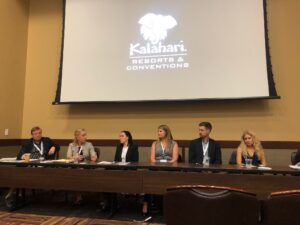 Justine M. Kasznica spoke at the Pennsylvania AV Summit on September 4-6 on a panel focused on autonomous vehicle regulations and standards. Leaders within the industry discussed AV regulations and standardization, balancing safety and innovation, consumer expectation, and self-certification vs. third-party verification.
Panelists photographed left to right: William Gouse, Ground Vehicle Standards – SAE International, Justine M. Kasznica, Attorney at Law – Babst Calland, Monica Lopez, Chief Science and Art Officer – La Petite Noiseuse Productions, Kelly Funkhouser, Head of CAV/Program Manager for Vehicle Usability and Automation – Consumer Reports, Auto Test Center, Matthew Wood, Safety Engineering Lead – Aptiv, and Jackie Erickson, Senior Director of Communications – Edge Case Research.
The PIOGA Press
(by Stephen Antonelli and Alexandra Farone)
For more than 50 years, the Equal Employment Opportunity Commission (EEOC) has required large and mid-sized employers to submit an annual report known as the EEO-1 Report, which identifies the number of employed workers in job categories based on sex, race and ethnicity. This data is now known as “Component 1” data because in 2016 the Obama administration proposed requiring a second component to this annual report that would require employers to also disclose the hours worked and annual earnings of these employees, in an effort to identify pay disparities. Known as “Component 2” data, the newly collected information should include employees’ W-2 earnings as well as hours worked in 12 pay bands for each of the 10 EEO-1 job categories.
In 2016, the Office of Management and Budget (OMB) approved the proposed requirement, and the requirement was slated to take effect in 2018. However, in 2017 the Trump administration stayed the implementation of this requirement, citing the burden of compliance upon employers. The validity of the stay became the subject of litigation in November 2017. The United States District Court for the District of Columbia vacated the stay in March 2019, and ultimately ruled to extend the Component 2 reporting deadline until September 30, 2019.
The court’s ruling had no effect on the standard May 31, 2019 deadline for employers to submit their yearly EEO-1 Reports for Component 1 data. The Department of Justice has appealed the ruling, but the requirement to comply and produce the data by September 30 remains in full force and effect during the pendency of the appeal. Therefore, by September 30 all employers with at least 100 employees are required to collect and submit Component 2 Data for a “workforce snapshot period” as selected by the employer for the reporting years 2017 and 2018. The EEOC portal website through which employers can submit information can be found at eeoccomp2.norc.org. Employers should keep the following steps in mind when preparing to produce Component 2 data:
- Identify an appropriate workforce snapshot period—one pay period—for each reporting year.
- Gather, sort and verify the relevant Component 2 data including employees’ race/ethnicity, sex, W-2 payroll information and hours worked.
- Provide actual hours worked by employees who are not exempt under the Fair Labor Standards Act (FLSA). For employees who are exempt from the FLSA, employers can provide either proxy hours or actual hours worked.
- Determine the number of full- and part-time employees pursuant to each of the ten EEO-1 job categories.
- Identify the number of employees who fall within each of the 12 compensation bands for each of the EEO-1 job categories. Employers must use Box 1 of an employee’s IRS Form W-2 to determine the appropriate compensation band to which each employee will be assigned.
- Tally the number of employees in each compensation band and job category by race/ethnicity and sex.
- Calculate the total number of hours worked (by race/ethnicity and sex) for the total number of employees who fall within the same compensation band for each job category. “Hours worked” should not include paid leave time such as PTO, holidays or vacation days.
- Decide whether to manually enter the data in an online form, or to create a separate data file for upload. Data file specifications have been released by the EEOC, and employers opting to create a data file are encouraged to develop the files in advance to ensure accurate and timely compliance.
Employers are encouraged to prepare and submit their Component 2 data prior to September 30 to avoid any potential technical difficulties due to the likely high influx of employers utilizing the EEOC portal website on the day of the deadline. The EEOC has not yet released guidance as to whether extensions may be granted in the event that technical difficulties affect accessibility of the EEOC portal website on September 30.
For the full article, click here.
Institute for Energy Law Oil & Gas E-Report
(by Anthony DaDamo)
“My possession of said land has been, and is, actual, hostile, visible, notorious, exclusive, continuous and peaceable.” One of several cotenants to land in northern West Virginia attested to this in an affidavit in 1903. While it is clear that the affiant was attempting to adversely possess the property, can one cotenant, who has an equal right to the possession of commonly held property along with all other cotenants, adversely possess the interests of his cotenants? West Virginia courts recognize the doctrine of ouster, which allows a cotenant in possession to acquire all interest of his or her cotenants in property, similar to adverse possession. As with its sister concept, adverse possession, recorded evidence of ouster is difficult to identify. In situations satisfying the elements for ouster, identifying and applying the principle is an effective way to clear clouds on title.
West Virginia courts recognize that the ouster of a cotenant may occur when all elements of adverse possession are met and there are objective facts to show specific intent to oust the cotenant. Ouster requires a tenant in common to occupy common property openly, notoriously and exclusively as the sole owner, while keeping up improvements, paying the real estate taxes and receiving the rents and profits. Proof of these elements shows an intention to ignore the rights of the ouster’s cotenants and such acts amount to an expulsion of non-possessing cotenants. The ouster’s possession will be regarded as adverse to his cotenants from the time the cotenants are shown to have knowledge of such acts and claims. The ousting cotenant must take actual possession of the property and claim title to the entire property for a period that satisfies the statute of limitations for adverse possession (10 years in West Virginia). Obtaining an interest in property by deed is not enough to affect ouster; the ousting cotenant must take actual possession of the land.
For the full article, click here.
For the full report, click here.
Smart Business
(by Jayne Gest with Kevin Douglass)
Many business owners claim to be blindsided when a co-owner files a lawsuit against them detailing a list of grievances. The truth is that business owners often ignore disagreements with co-owners for years or even decades by focusing on pressing day-to-day business matters.
If your company does not address owner conflicts and succession planning issues, these matters will eventually disrupt, impact or injure the business. But with the right approach — and the right facilitator — these challenges can be identified and resolved.
“Disagreements among co-owners of a business are natural. They come up frequently. The key is how owners address those conflicts. Even a company with one owner eventually has to deal with succession issues to avoid potential tension between family members or others vying to be the next generation of owners,” says Kevin Douglass, shareholder at Babst Calland.
Smart Business spoke with Douglass about conflict resolution among business owners.
What events can trigger an escalation of a disagreement between owners?
The reasons why a disagreement may bubble to the surface are almost endless. One trigger is business financial health. If the company is doing very well, owners may feel entitled to more compensation or at least more input into how additional profits will be invested. If the business is struggling, an owner’s benefits may need to be decreased and tough decisions made about the company’s direction.
Other reasons for conflict include a change in an owner’s level of commitment or job performance, a desire to change the governance structure, conflicting business strategies, and compensation and benefit differences. Personal changes may also spark controversy, such as an owner’s marriage or divorce, owner children who are employed by the business, personal finances or advancing age.
It is surprising how often business partners, including those in the same family, do not openly voice their concerns. If co-owners are not comfortable discussing issues or sharing information, resentment festers and grows.
What are the risks of ignoring owner disagreements?
Owner disagreements, or failing to address succession issues, can spill over into business operations and finances. Employees, lenders, customers, vendors and others can easily become aware of, and even embroiled in, the drama. They may be confused about which owner is in charge. If left unchecked, the reputation and health of the business may be threatened. Just as significantly, relationships on a professional, personal and family level may be destroyed, if not addressed thoughtfully and with sensitivity.
Some owners resort to litigation to obtain the satisfaction they believe they are entitled to — and the expense, stress and distraction of co-owner litigation is never positive.
How can owners resolve their underlying issues more quickly?
An owner willing to address an issue with a co-owner head-on is often in the best position to resolve it. However, given the sensitivity of all the moving parts, including each owner’s legal rights and vested interest in the outcome, it frequently makes sense for owners to separately consult with an attorney for a comprehensive and objective assessment of the issues, risks and alternatives for resolution.
As part of that process, it is important to understand not only why the disgruntled owners are upset, but also what owners hope to achieve and whether their expectations are realistic. After fully vetting an owner’s desires and legal rights, finding a solution may include answering difficult questions. Do the owners want to continue in business together, or separate via a buyout? Do the owners share the same vision for the company’s future? Does the ownership, compensation or governance structure need to be redefined? Are new leaders and investors needed? Should the business be sold? Should a strategic or succession plan be developed, and if so, what should it look like?
Any resolution of issues involving owner conflict or succession should strive to satisfy, or at least account for, the concerns of all owners and interested parties. Unlike a winner-takes-all litigation setting, an opportunity exists to develop workable solutions for owners while preserving and protecting the business. Wise owners take advantage of that opportunity.
For the PDF, click here.
For the full article, click here.
Employment & Labor Alert
(by Stephen Antonelli and Alexandra Farone)
In May 2019, we issued a Client Alert after the U.S. District Court for the District of Columbia ordered the EEOC to collect employers’ pay and hours worked data (commonly referred to as “Component 2 Data”) from certain employers. Specifically, the Court ordered the EEOC to collect such data from employer-selected pay periods during the years 2017 and 2018.
We issue this follow-up Client Alert because, by September 30, 2019, all employers with at least 100 employees are required to collect and submit Component 2 Data for a “workforce snapshot period” as selected by the employer for the reporting years 2017 and 2018.
The mandate for employers to collect Component 2 Data is the subject of an ongoing federal lawsuit. The Department of Justice has appealed the court order, but the requirement to comply and produce the data by September 30, 2019 remains in full force and effect during the pendency of the appeal.
The EEOC portal website through which employers can submit information can be found at: https://eeoccomp2.norc.org/.
Employers should keep the following steps in mind when preparing to produce Component 2 Data:
- Identify an appropriate workforce snapshot period—one pay period—for each reporting year.
- Gather, sort, and verify the relevant Component 2 Data including employees’ race/ethnicity, sex, W-2 payroll information, and hours worked.
- Provide actual hours worked by employees who are not exempt under the Fair Labor Standards Act (FLSA). For employees who are exempt from the FLSA, employers can provide either proxy hours or actual hours worked.
- Determine the number of full- and part-time employees pursuant to each of the 10 EEO-1 job categories.
- Identify the number of employees who fall within each of the 12 compensation bands for each of the EEO-1 job categories. Employers must use Box 1 of an employee’s IRS Form W-2 to determine the appropriate compensation band to which each employee will be assigned.
- Tally the number of employees in each compensation band and job category by race/ethnicity and sex.
- Calculate the total number of hours worked (by race/ethnicity and sex) for the total number of employees who fall within the same compensation band for each job category. “Hours worked” should not include paid leave time such as PTO, holidays, or vacation days.
- Decide whether to manually enter the data in an online form, or to create a separate data file for upload. Data file specifications have been released by the EEOC, and employers opting to create a data file are encouraged to develop the files in advance to ensure accurate and timely compliance.
Babst Calland’s Employment and Labor Group can assist employers that are subject to this regulation by helping them with selecting an appropriate workforce snapshot period, organizing and categorizing employees’ data, creating a compliant data upload file for submission, and navigating the nuances of this data collection. For more information about what is required and how Babst Calland can assist you, please contact Stephen A. Antonelli (412) 394-5668 or santonelli@babstcalland.com, or Alexandra G. Farone at (412) 394-6521 or afarone@babstcalland.com.
For the PDF, click here.
The Legal Intelligencer
(by Blaine Lucas and Alyssa Golfieri)
Land use disputes arising from the regulation of outdoor advertising signs (i.e., billboards) are not foreign in Pennsylvania, and over the past several decades, have become an increasingly common source of litigation in both state and federal court. Most recently, the U.S. Court of Appeals for the Third Circuit added Adams Outdoor Advertising v. Pennsylvania Department of Transportation, 2019 U.S. App. LEXIS 20841 (3d. Cir. 2019), to the billboard case law progeny.
By way of background, in 1965 the Federal Highway Beautification Act, 23 U.S.C. Section 131 et seq., was enacted to establish a framework for federal-state agreements related to the regulation of outdoor advertising signs near highways. In order to meet the commonwealth’s obligations under the act, in 1971 the Pennsylvania General Assembly enacted the Outdoor Advertising Control Act, 36 Pa. Stat. Section 2718.101-115, which sets forth land use and permitting regulations applicable to outdoor advertising signs near the commonwealth’s interstate and primary highways. The Outdoor Advertising Act charges the Pennsylvania Department of Transportation (PennDOT) with administration of the Outdoor Advertising Act.
At issue in Adams Outdoor is a provision in the Outdoor Advertising Act known as the “interchange prohibition.” The interchange prohibition bars the construction of outdoor advertising signs within 500 feet of a highway interchange or “safety rest area.” The interchange prohibition expressly exempts “official” signs (i.e., directional or other official signs or notices erected and maintained by public officers or agencies for the purpose of carrying out official duty or responsibility) and “on premises” signs (signs that advertise the sale or lease of, or activities being conducted upon, the real property where the signs are located).
Pursuant to the Outdoor Advertising Act, Adams Outdoor Advertising applied to PennDOT for a permit to construct and maintain an off-premises outdoor advertising sign along a regulated highway and within 500 feet of an interchange. After waiting over a year for PennDOT to render a decision on its application, Adams Outdoor initiated a lawsuit with the U.S. District Court for the Eastern District of Pennsylvania challenging the constitutionality of the Outdoor Advertising Act’s permitting scheme and interchange prohibition. Adams Outdoor argued, among other things, that the interchange prohibition is impermissibly vague in violation of the First Amendment; the interchange prohibition is a content-based regulation that on its face cannot survive a First Amendment challenge under a strict scrutiny test; and the Outdoor Advertising Act’s permitting scheme is unconstitutional for failing to impose a timeframe by which PennDOT must render a decision on permit applications.
The district court dismissed Adams Outdoor’s vagueness challenge on the pleadings and granted PennDOT summary judgment on Adams Outdoors’ First Amendment scrutiny challenge. However, the court granted Adams Outdoor summary judgment on its permit timeframe challenge, and simultaneously issued an injunction prohibiting PennDOT from enforcing the Outdoor Advertising Act’s permitting scheme until it established a timeframe by which decisions must be made. Adams Outdoor appealed to the U.S. Court of Appeals for the Third Circuit.
On appeal, the Third Circuit upheld the district court’s conclusion that the interchange prohibition was not impermissibly vague, noting the regulation provides people of ordinary intelligence a reasonable opportunity to understand what conduct is prohibited and does not authorize or encourage arbitrary and discriminatory enforcement. The Third Circuit also upheld the district court’s grant of an injunction barring enforcement of the Outdoor Advertising Act’s permitting scheme until a reasonable time limit for permit decisions was imposed. Finally, the Third Circuit reversed the district court’s conclusion that the interchange prohibition satisfies the First Amendment, and remanded the matter back to the district court. Before doing so, however, the Third Circuit clarified the level of scrutiny appropriate under the circumstances.
In this regard, the Third Circuit addressed three arguments—that the Outdoor Advertising Act violated the First Amendment because of the the official signs exemption: the for sale or lease exemption; and the on- versus off-premises sign distinction. The court quickly disposed of the first argument, finding that the exemption for directional or other official signs or notices erected and maintained by public officers or agencies are forms of government speech, and an exemption for them does not trigger strict scrutiny.
As to the latter two exemptions, Adams Outdoor pressed the Third Circuit to follow the U.S. Supreme Court’s decision in Reed v. Town of Gilbert, 135 S. Ct. 2218 (2015), where the court applied strict scrutiny to an Arizona town’s sign ordinance imposing inconsistent regulations on different types of temporary outdoor signs. See “Content Neutrality in the Government Regulation of Free Speech,” published by The Legal Intelligencer on Sept. 1, 2015, for a summary of the Supreme Court’s Reed v. Town of Gilbert decision. Disagreeing with Adams Outdoor, the Third Circuit distinguished Town of Gilbert on the basis that it did not establish a specific legal standard by which to evaluate laws regulating on- and off-premises signs differently. The Third Circuit further emphasized Justice Samuel Alito’s and Justice Elena Kagan’s concurring opinions in Town of Gilbert, where the justices stated that laws distinguishing between on- and off-premises signs would not trigger strict scrutiny due to the lack of government censorship or viewpoint discrimination contained therein.
Declining to apply Town of Gilbert, the Third Circuit turned to its 1994 precedent in Rappa v. New Castle County, 18 F.3d 1043, (3d. Cir. 1994), where the Third Circuit set out a framework for reviewing the constitutionally of outdoor advertising regulations that distinguish between on- and off-premises signs, such as the Interchange Prohibition challenged in Adams Outdoor. In Rappa, the Third Circuit concluded that:
- Laws exempting on-premises signs advertising activities taking place on the property are subject to intermediate scrutiny—”the law must be narrowly tailored to serve a significant governmental interest, and … leave open ample alternative channels for communication of the information.”
- Laws exempting on-premises signs advertising the sale or lease of real property on which the signs are located are subject to a special “context-specific” scrutiny—the exemption must be substantially related to advancing an important state interest that is at least as important as the interests advanced by the overall prohibition, no broader than necessary to advance the special goal, and narrowly drawn so as to impinge as little as possible on the overall goal.
Under either of these standards, the secretary of PennDOT bore the burden of proving that the challenged exemption survived the applicable level of First Amendment scrutiny. Finding that she had failed to meet her burden with respect to either, the Third Circuit reversed the district court’s ruling and remanded the case to litigate further the secretary’s justification for the exemptions.
While the Third Circuit’s decision in Adams Outdoor provides a significant amount of guidance and clarification as to the scrutiny standard applicable to state and local regulatory activity governing outdoor advertising signs, such regulations will likely remain a topic of much debate and controversy. Accordingly, it is critical that local municipalities remain cognizant of the ever-evolving laws, at both the state and federal level, to ensure they are appropriately justified in imposing regulations on outdoor advertising signs.
For the full article, click here.
The Legal Intelligencer
(by Stephen Antonelli and Carly Loomis-Gustafson)
In mid-June, in a unanimous opinion, the Pennsylvania Supreme Court articulated a new work product doctrine waiver analysis in BouSamra v. Excela Health, No. 5 WAP 2018 (Pa. June 18, 2019). While the decision will be seen as a victory for corporate defendants in that it provides clarity concerning waiver of the attorney work product doctrine related to communications and consultations with third parties in anticipation of litigation, it should also be read as a cautionary tale in support of continued mindfulness in dissemination of privileged information.
The decision stems from a discovery dispute in a defamation case commenced by Dr. George R. BouSamra against Excela Health Westmoreland Regional Hospital and others. BouSamra filed suit after another cardiologist affiliated with Excela accused BouSamra and his colleague, Dr. Ehab Morcos, of regularly overestimating arterial blockages and, as a result, performing improper and medically unnecessary stenting. As part of an attempt to manage potential public relations issues stemming from the results of two peer review studies related to the accusations, Excela’s in-house counsel forwarded an email containing privileged information that it had received from outside counsel to a member of a third-party public relations firm, who then forwarded the email to other members of the firm.
After noticing the emails between Excela and its public relations firm on Excela’s privilege log, BouSamra filed a motion to compel production of the emails. A special master assigned by the trial court determined that Excela had not waived any privileges. The trial court sustained BouSamra’s exceptions to the special master’s recommendation, noting that the third-party was not an agent of Excela’s counsel. It therefore concluded that the attorney-client privilege had been waived. Neither the trial court nor the special master discussed waiver of the work product doctrine. On appeal, a unanimous panel of the Pennsylvania Superior Court affirmed the trial court’s order with respect to the attorney-client privilege, and also found the work product doctrine to be inapplicable. The Superior Court’s decision was based, in part, upon its reasoning that the document at issue belonged to Excela rather than its outside counsel, and that it had not been shared with the public relations firm to assist outside counsel with preparing for litigation.
After granting Excela’s petition for allowance of appeal, the Pennsylvania Supreme Court affirmed in part and reversed in part. The court agreed with BouSamra and ruled that Excela had indeed waived the attorney-client privilege when it shared the protected communication with the public relations firm on the grounds that the third-party firm was not an agent of Excela that was facilitating an ability to provide legal advice. The court reversed, however, on the issue of whether the work product doctrine had been waived. The court articulated a new work product waiver analysis by holding that the privilege is not waived merely by the disclosure to a third party, “unless the alleged work product is disclosed to an adversary or disclosed in a manner which significantly increases the likelihood that an adversary or anticipated adversary will obtain it.”
In announcing this new rule, the court acknowledged that “a fact intensive analysis is required” to determine whether the privilege had been waived. As a result, and because the factual record was insufficient for it to conduct the waiver analysis, the court remanded the matter to the trial court for “factual finding and application of the newly articulated waiver analysis,” as it is the role of the trial court to determine which facts and circumstances should bear the most weight in any given analysis.
In its opinion, the court noted the distinguishing characteristics of the attorney-client privilege and the work product doctrine: disclosure to a third party generally waives the attorney-client privilege, but the same cannot be said for application of the work product doctrine because disclosure does not always undermine its purpose. Stated differently, the attorney-client privilege “is designed to protect confidentiality, so that any disclosure outside the magic circle is inconsistent with the privilege; by contrast, work product protection is provided against adversaries.” Furthermore, the protection afforded by the attorney-client privilege belongs to the client and protects disclosure made to their own attorney, while the work product doctrine belongs to the counsel, as it protects disclosure of the attorney’s mental impressions, conclusions, opinions, memoranda, notes, summaries, legal research and legal theories.
Even though the BouSamra opinion will likely be welcomed by corporate entities and the defense bar, it should not be read as providing blanket protection for all communications that might, in any way, constitute an attorney’s work product. The court simply established a means by which to determine if the purpose of the doctrine has been undermined by focusing the analysis to disclosure to an adversary, pursuant to the essential purpose of the Pennsylvania Rule of Civil Procedure 4003.3.
Communications between attorneys or clients with third parties, especially in the context of seeking consultation for a real or potential crisis, can often occur at a moment’s notice. Despite BouSamra, attorneys should continue to carefully consider the consequences of sharing information and the manner in which the information is shared. In other words, attorneys—whether outside or inside counsel—should not view BouSamra as an invitation to be less careful with their third-party communications, especially given the fact that courts have yet to apply the requisite “fact intensive analysis” to the new test.
As addressed by Justice Christine Donohue in her concurring opinion, the court’s grant of allocatur “presumed that the documents at issue were otherwise (i.e., absent waiver) protected by the work product doctrine.” The unanimous majority opinion then “makes the same presumption, as it merely announces that the documents are attorney work product without any disclosure of the nature of the contents of those documents (including whether or not they were prepared in litigation).” The court’s decision not to provide the retrospection that may be helpful to attorneys in determining, prior to disseminating information, how a court may classify work product in a specific instance leaves room for differing opinions on the issue. In other words, there must be an analysis of whether the documents at issue actually qualify as work product, which is often broadly defined as the impressions, conclusions, opinions, memoranda, notes, summaries, legal research and legal theories of an attorney.
Although BouSamra provides clarity and comfort to attorneys who wish to more freely communicate with third-party consultants, it does not open the door for protection of haphazard communications with third parties under the guise of work product protection.
Stephen A. Antonelli is a shareholder in the employment and labor and litigation groups of Babst Calland Clements & Zomnir. His practice includes representing employers in all phases of labor and employment law, as well as matters of general litigation. Contact him at santonelli@babstcalland.com.
Carly Loomis-Gustafson is an associate in the litigation group of the firm, where she assists in the ligation of a wide variety of legal matters. Contact her at cloomis-gustafson@babstcalland.com.
For the full article, click here.
Environmental Alert
(by Christopher (Kip) Power and Robert Stonestreet)
On August 12, 2019, the federal District Court for the Southern District of West Virginia (Judge Irene C. Berger) entered an order dismissing a lawsuit filed by the Sierra Club and other organizations (Citizen Groups) seeking to halt operations under a mining permit issued to Republic Energy, LLC (Republic) by the West Virginia Department of Environmental Protection (WVDEP). Coal River Mountain Watch, et al. v. Republic Energy, LLC, Civil Action No. 5:18-cv-01449, S.D. W.Va. (Memorandum Opinion and Order, August 12, 2019). The Citizen Groups had sought to bring an end to mining under the permit because operations were not initiated until 2018, even though the permit was originally issued by the WVDEP in June 2008. Pursuant to W.Va. Code § 22-3-8(a)(3) (a part of WVDEP’s approved program under the federal Surface Mining Control and Reclamation Act of 1977, 30 U.S.C. §1201, et seq. (SMCRA)), a mining permit terminates if mining activities under it are not initiated within three (3) years of its issuance, unless extended by the WVDEP. The company that previously held the Republic mining permit never requested such an extension. The WVDEP, however, granted an extension of the permit at issue in February 2012, after the agency had notified the permit holder of the expiration of the three-year limit and provided that company with an opportunity to seek a late (retroactive) extension. After the permit was transferred to Republic, it sought and received a further extension in 2015 on the basis of financial hardship, which the Court noted “is not a recognized statutory justification for an extension.”
Before filing the federal civil action, the Citizen Groups had filed an administrative complaint about the situation with the federal Office of Surface Mining Reclamation and Enforcement (OSM), which is the oversight agency under SMCRA. The Citizen Groups tried to convince OSM to invalidate the permit. OSM declined to do so and concluded that WVDEP had not acted arbitrarily or abused its discretion by extending the permit. Though not explained in the August 12 opinion, the primary reason that the WVDEP allowed Republic’s predecessor to seek an untimely, retroactive extension of the permit was based on the fact that the WVDEP (at that time) had a long-established practice of providing operators with notice of the impending expiration of the three-year limitation period. The WVDEP did not provide that notice to the permit-holder in this case, and the agency concluded that it would be unfair to penalize the company for assuming that it would receive notice under that policy.
During the pendency of the case, the WVDEP renewed the mining permit on January 10, 2019. The Citizen Groups did not avail themselves of the opportunity to pursue an administrative appeal of the renewal before the West Virginia Surface Mine Board, apparently willing to bank their hopes of terminating the operations under the permit on this federal court challenge.
Although a number of different grounds were put forward by Republic in support of its motion to dismiss, the District Court dismissed the Citizen Groups’ lawsuit on the basis of a narrow ruling that the case did not fit within the scope of SMCRA’s Citizen Suit provision at 30 U.S.C. §1270(a)(1). That provision allows affected persons to bring a citizen suit against any person “who is alleged to be in violation of any rule, regulation, order or permit” issued pursuant to SMCRA or an approved state program. The District Court found that “the essence of the Citizen Groups’ complaint is that the permit was issued (or extended) in violation of the statute,” not that Republic was operating in violation of its permit. That claim, in turn, is one in which the WVDEP’s conduct was at issue, rather than any activity by Republic. Since the Citizen Groups did not allege that Republic was violating any SMCRA rule, regulation, order, or permit, the District Court concluded that it did not have jurisdiction to consider the Citizen Groups’ claims. Therefore, the court dismissed the complaint.
The Court further observed that if the Citizen Groups had attempted to bring this action against the WVDEP, they would have likely been unsuccessful in light of the Fourth Circuit’s decision in Molinary v. Powell Mountain Coal Company, 125 F.3d 231 (4th Cir. 1997). In that case, the court ruled that SMCRA’s citizen suit provision does not allow a civil action to be brought against a state permitting agency to challenge the agency’s permitting decisions. Although not explained in the court’s opinion, this does not mean that no remedy exists for potentially improper agency permitting decisions. A challenge to a permitting decision by the WVDEP may be pursued through an administrative appeal with the West Virginia Surface Mine Board. Decisions by the Surface Mine Board may be appealed to circuit court and ultimately to the West Virginia Supreme Court of Appeals. The Citizen Groups could have challenged the legality of the WVDEP decisions to extend, and ultimately renew, the mining permit through such an appeal. The opinion does not indicate why the Citizen Groups did not pursue such an appeal.
The court’s decision is well reasoned and consistent with settled law that challenges to the issuance or terms of a mining permit must be pursued through the administrative appeal process. Such claims are not properly asserted via a citizen suit in federal court. This decision is also consistent with – and should help buttress – the regulatory framework established by SMCRA and the West Virginia mining program for the resolution of disputes over permitting decisions by state agencies.
At the same time, the proceedings described in this opinion have led the WVDEP to re-evaluate its administration of the “three-year, not started” statute, resulting in what many have perceived to be a more rigorous approach to evaluating exception requests from permittees. All mining permittees should consider creating their own internal alerts for permits as to which mining has not started within two (2) years, so that they will have sufficient time to develop their justification for an extension and present that to the WVDEP well ahead of the permit expiration date.
If you have any questions about the Republic decision or its impact on the mining industry, please contact Christopher B. (Kip) Power at (681) 265-1362 or cpower@babstcalland.com, or Robert M. Stonestreet at (681) 265-1364 or rstonestreet@babstcalland.com.
Click here for PDF.
Babst Calland is pleased to announce that five lawyers were selected as 2020 Best Lawyers “Lawyer of the Year” in the Pittsburgh, Pa. and Charleston, W. Va. (by BL Rankings). Only a single lawyer in each practice area and designated metropolitan area is honored as the “Lawyer of the Year,” making this accolade particularly significant.
Receiving this designation reflects the high level of respect a lawyer has earned among other leading lawyers in the same communities and the same practice areas for their abilities, professionalism, and integrity. Those named to the 2020 Best Lawyers “Lawyer of the Year” include:
Donald C. Bluedorn II, Environmental Law “Lawyer of the Year” in Pittsburgh, Pa. – In addition to the “Lawyer of the Year” award, Donald Bluedorn was also listed in the 2020 Edition of The Best Lawyers in America in Environmental Law, Litigation – Environmental, and Water Law.
Kevin J. Garber, Energy Law “Lawyer of the Year” in Pittsburgh, Pa. – In addition to the “Lawyer of the Year” award, Kevin Garber was also listed in the 2020 Edition of The Best Lawyers in America in Environmental Law, Natural Resources Law, Energy Law, Water Law, and Litigation – Environmental.
Blaine A. Lucas, Litigation – Land Use and Zoning “Lawyer of the Year” in Pittsburgh, Pa. – In addition to the “Lawyer of the Year” award, Blaine Lucas was also listed in the 2020 Edition of The Best Lawyers in America in Energy Law, Land Use and Zoning Law, Municipal Law, and Litigation – Land Use and Zoning.
Timothy M. Miller, Oil and Gas Law “Lawyer of the Year” in Charleston, W.Va. – In addition to the “Lawyer of the Year” award, Timothy Miller was also listed in the 2020 Edition of The Best Lawyers in America in Energy Law, Oil and Gas Law, Commercial Litigation, Bet-the-Company Litigation, and Litigation – Environmental.
Christopher B. “Kip” Power, Litigation – Environmental Law “Lawyer of the Year” in Charleston, W.Va. – In addition to the “Lawyer of the Year” award, Kip Power was also listed in the 2020 Edition of The Best Lawyers in America in Natural Resources Law, Energy Law, Commercial Litigation, Mining Law, Oil and Gas Law, Litigation – Regulatory Enforcement (SEC, Telecom, Energy), Litigation – Environmental, Litigation – Land Use and Zoning, and Litigation – Municipal.
In addition, 38 Babst Calland lawyers were selected in 26 practice areas for inclusion in the 2020 Edition of The Best Lawyers in America (by BL Rankings), the most respected peer-review publication in the legal profession:
- Justin D. Ackerman – Real Estate Law
- Richard J. Antonelli – Litigation – Labor and Employment, Labor Law – Management, Employment Law – Management
- Chester R. Babst – Environmental Law, Litigation – Environmental
- Steven F. Baicker-McKee – Environmental Law, Commercial Litigation, Litigation – Environmental
- Donald C. Bluedorn – Environmental Law, Water Law, Litigation – Environmental
- Dean A. Calland – Environmental Law
- Matthew S. Casto – Commercial Litigation
- Frank J. Clements – Corporate Law
- Kathy K. Condo – Commercial Litigation
- James Curry – Oil and Gas Law
- Julie R. Domike – Environmental Law, Litigation – Environmental
- Kevin K. Douglass – Natural Resources Law
- Christian A. Farmakis – Corporate Law
- Kurt F. Fernsler – Construction Law, Litigation – Construction
- Kevin J. Garber – Environmental Law, Natural Resources Law, Energy Law, Water Law, Litigation – Environmental
- Norman E. Gilkey – Bankruptcy and Creditor Debtor Rights / Insolvency and Reorganization Law, Litigation – Bankruptcy
- Steven M. Green – Energy Law
- Lindsay P. Howard – Environmental Law, Litigation – Environmental
- D. Matthew Jameson – Construction Law, Litigation – Construction
- Richard J. Lolli – Construction Law
- Blaine A. Lucas – Energy Law, Land Use and Zoning Law, Municipal Law, Litigation – Land Use and Zoning
- John A. McCreary – Labor Law – Management
- Janet L. McQuaid – Environmental Law
- James D. Miller – Litigation – Construction
- Timothy M. Miller – Energy Law, Commercial Litigation, Bet-the-Company Litigation, Oil and Gas Law, Litigation – Environmental
- Jean M. Mosites – Environmental Law
- Christopher B. Power – Environmental Law, Natural Resources Law, Energy Law, Commercial Litigation, Mining Law, Oil and Gas Law, Litigation – Regulatory Enforcement (SEC, Telecom, Energy), Litigation – Environmental, Litigation – Land Use and Zoning, Litigation – Municipal
- Joseph K. Reinhart – Environmental Law, Natural Resources Law, Energy Law, Litigation – Environmental
- Bruce F. Rudoy – Mergers and Acquisitions Law, Corporate Law
- Charles F.W. Saffer – Real Estate Law
- Richard W. Saxe – Construction Law, Litigation – Construction
- Mychal Sommer Schulz – Litigation – ERISA
- Mark D. Shepard – Commercial Litigation, Bet-the-Company Litigation, Litigation – Environmental
- Steven B. Silverman – Information Technology Law, Commercial Litigation
- Laura Stone – Corporate Law
- Robert M. Stonestreet – Environmental Law, Energy Law, Commercial Litigation
- David E. White – Construction Law, Litigation – Construction
- Michael H. Winek – Environmental Law
Best Lawyers undergoes an authentication process, and inclusion in The Best Lawyers in America is based solely on peer review and is divided by geographic region and practice areas. The list has published for more than three decades, earning the respect of the profession, the media, and the public as the most reliable, unbiased source of legal referrals. Its first international list was published in 2006 and since then has grown to provide lists in over 65 countries.