Legal Intelligencer
(by Max Junker and Anna Jewart)
Municipalities face many restrictions on how they may use real property, and Pennsylvania law places additional statutory restrictions on a municipality’s conveyance of property which has been used as a “public facility.” The Donated or Dedicated Property Act, 53 P.S. §§3381-3386 (DDPA), states that “[a]ll lands or buildings… donated to a political subdivision for use as a public facility, or dedicated to the public use or offered for dedication to such use… shall be deemed to be held by such political subdivision, as trustee, for the benefit of the public with full legal title in the said trustee.” “Lands” include all real estate, whether improved or unimproved, and a “public facility” includes, without limitation “any park, theater, open air theater, square, museum, library, concert hall, recreation facility or other public use.” Any such lands or buildings are required to be used only for the purpose or purposes for which they were originally donated or dedicated, unless modified by court order.
Consequently, a municipality cannot simply sell or change the use of real property donated for or dedicated to use by the public. This concept may seem familiar to the lay person and land use practitioner alike because, in essence, the DDPA codifies the common law of the “public trust doctrine” which requires that public property dedicated to public use be held by the municipality, as a trustee, for the benefit of the community.
However, the DDPA allows the municipality to dispose of public trust property in certain specific circumstances if approved by the court. Specifically, under Section 4 of the DDPA, a municipality may apply to the orphan’s court for certain enumerated relief if, in the opinion of the municipality, the continuation of the original use of the property held in trust as a public facility is no longer practicable or possible and has ceased to serve the public interest. Under the DDPA, the orphan’s court may permit the trustee to:
- substitute other lands or property of at least equal size and value in exchange for the trust property in order to carry out the trust purposes;
- sell the property and apply the proceeds to carry out the trust purposes, but only if other property is not available;
- apply the property or proceeds therefrom to a different public purpose, but only if the original trust purpose is no longer practicable or possible or in the public interest; or
- relinquish the land and buildings if there has been no formal acceptance, and only if the court is satisfied that no acceptance by implication arising out of public use occurred.
Recently, in the case of In re Township of Jackson, 280 A.3d 1074 (Pa. Cmwlth, 2022), the Commonwealth Court revisited several seminal cases interpreting the DDPA to consider whether the orphan’s court had properly denied the petition of Jackson Township, Lebanon County, to sell a parcel donated to the Township for use as a public park. In part, the Court considered whether the orphan’s court or the municipality had the discretion to determine whether the trust purpose was no longer practicable, possible, or in the public interest under Section 4 of the DDPA.
Like many municipalities in Pennsylvania, Jackson Township’s Subdivision and Land Development Ordinance (SALDO) requires a developer to either dedicate land to the Township for public recreational use or pay fees in lieu thereof. When the developer of a residential plan sought Township approval, it opted to donate land to the Township, and chose a 5.7 acre parcel identified as Lot 107 (“Park Lot”). In 2005, the developer conveyed the Park Lot by deed to the Township to be used “for ever [sic] as a public park or [for] other public purpose.” At the time of donation, however, there existed conditions on the Park Lot which rendered it less than ideal for use as a public park including a drainage easement, a private road easement, steep slopes, limited public access, and heavily wooded areas. Although the Township Recreation Board recommended against accepting the Park Lot, the Board of Supervisors accepted the donation as a public park.
Later, the Township studied how to develop the Park Lot as a trail system, basketball court, or nature preserve. Although the Township budgeted for improvements, none ever occurred. Eventually, at the recommendation of the Recreation Board, the Township Supervisors voted to pursue a sale of the Park Lot. The Township filed a petition for leave of court to sell the Park Lot for the stated reason that “[d]ue to the topography of the land as well as the cost to maintain said lot,” it was not practicable to develop it as a public park and that the continued use does not “serve the general public interest.”
In the orphan’s court, the Township Engineer testified that although the Park Lot could not accommodate sports fields or recreational buildings, it could be used as a walking trail and a flat portion could be used as a playground or basketball court at a cost of $80,000. Neighbors testified against the sale of the parcel, stating the lot connected two ball-fields and that a trail through the Park Lot would allow children to walk to the fields without crossing the roads. Residents showed that the Township had advertised and developed plans for the Park Lot as a neighborhood park with a walking path and basketball court. In addition, the developer had charged a premium for lots located adjacent to the Park Lot, touting it as a public park. The Township argued that a walking trail could affect pedestrian safety, that the excavation and grading required would cost more than it would on a flat lot, and that it was in the best economic interest of the Township to sell the Park Lot.
The orphan’s court denied the Township’s petition. Although it recognized the Park Lot was not ideal for recreational development, it found that the Township failed to establish that it was entitled to relief under Section 4 of the DDPA. The orphan’s court noted that the Park Lot had been dedicated for recreation purposes and the Township had accepted that use for the public. It found that the vacant and unimproved nature of the Park Lot did not change the nature of the dedication or its use for recreation purposes, defining recreation as “refreshment of strength and spirits after work,” or a “means of refreshment or diversion.”
On appeal, the Township argued the orphan’s court was bound by the Township’s determination that the original use of the property was no longer practicable or possible and no longer served the public interest. Relying on In re Erie Golf Course, 992 A.2d 75 (Pa. 2010) and In re Borough of Downington, 161 A.3d 844 (Pa. 2017), the Court found that the orphan’s court has final discretion about how the property should be used, and that the Township, as trustee, had a fiduciary obligation to maintain donated and dedicated land for public use. As stated by the Court: “Section 4 of the [DDPA] does not vest controlling discretion in the political subdivision; rather, it merely authorizes the municipality, as trustee, to file an application for relief in the trial court.” The Court noted that the Supreme Court in Erie Golf Course made it clear that “the sale of the property was not discretionary with the [municipality] in the first instance in light of its fiduciary obligations,” and that “essential discretion lay in the [trial] court, to which appellate court deference is due.” Therefore, Section 4 of the DDPA does not vest controlling discretion in the municipality, but rather merely authorizes the municipality to file a petition for relief.
Ultimately, the Court found no error in the orphan court’s judgment that the Township had not established that recreational use of the Park Lot was no longer practicable, either physically or financially. The Court noted the Park Lot could be left unimproved or the Township could develop a walking trail and basketball court at a cost of $80,000 for which the Township had sufficient funds. In addition, the Court rejected the Township’s argument that the orphan’s court had abused its discretion because the proceeds from the Park Lot could be better used by improving another recreational facility which would benefit a wider group of residents. The Court reasoned that the DDPA focuses on whether the original use has ceased to serve the public interest, not whether another use would better serve the same.
Max Junker is a shareholder in the public sector, energy and natural resources and employment and labor groups of Babst Calland. Anna S. Jewart is an associate in Babst Calland’s Public Sector Services group and focuses her practice on zoning, subdivision, land development, and general municipal matters.
To view the full article, click here.
Reprinted with permission from the October 20, 2022 edition of The Legal Intelligencer© 2022 ALM Media Properties, LLC. All rights reserved.
PIOGA Press
(By Brianne Kurdock and Keith Coyle)
On August 24, 2022, the Pipeline and Hazardous Materials Safety Administration (PHMSA) published a new final rule for onshore gas transmission pipelines (the Rule). The Rule marks the completion of a three-phase rulemaking process, commonly referred to as the Gas Mega Rule, that began more than a decade ago. The Rule focuses mainly on transmission pipelines and amends or adds various provisions to 49 C.F.R. Part 192. The Rule will become effective on May 24, 2023. There are six key areas that owners and operators of gas transmission pipelines should be aware of:
Definitions and Standards Incorporated by Reference
PHMSA added new definitions for terms referenced in the regulations, including close interval survey, distribution center, dry gas or dry natural gas, hard spot, in-line inspection (ILI), in-line inspection tool or instrumented internal inspection device, and wrinkle bend. The definition of transmission pipelines was revised to include a “connected series” of pipelines to clarify that transmission pipeline can be downstream of other transmission pipelines, and to allow operators to voluntarily designate their pipelines as transmission lines.
Management of Change
Operators of all onshore gas transmission pipelines must now evaluate and mitigate any significant changes that pose a risk to safety or the environment through a management of change process. The process must include the reasons for the change, the authority for approving changes, an analysis of the implications, the acquisition of required work permits, and evidence documenting communication of the change to affected parties, time limitations, and the qualification of staff. For pipeline segments not covered by Subpart O, operators must implement this management of change process by February 26, 2024. Operators may seek a technically justified extension of this deadline of up to one year through the section 192.18 notification process. PHMSA specifically noted that these changes do not apply retroactively and do not cover gathering or distribution pipelines.
Corrosion Control and Related Construction Requirements
The Rule amends numerous corrosion control requirements for onshore gas transmission pipelines, addressing the monitoring and remediation, if needed, of both external and internal corrosion. The Agency issued new requirements to conduct pipe coating assessments soon after construction, determine protective coating strength, survey for interference currents, and monitor gas streams for internal corrosivity. In conjunction with the enhanced corrosion monitoring for internal and external corrosion, PHMSA established new corrosion control remediation criteria and timelines to correct discovered deficiencies. PHMSA acknowledged that these new construction and corrosion control requirements do not apply to gathering or distribution pipelines.
Inspections and Remedial Action Following Extreme Weather Events
Similar to the requirements for hazardous liquid pipeline operators, PHMSA is now requiring gas operators to perform an initial inspection following extreme weather events such as earthquakes, river channel migration, and landslides. The operator must conduct the inspection 72 hours after it reasonably determines that the affected area can be safely accessed by personnel and equipment and the equipment and personnel are available. The operator must take prompt remedial action to ensure the safe operation of a pipeline based on the information obtained from the inspection. PHMSA explains that such remedial actions may include reducing the operating pressure, shutting down the pipeline, modifying, repairing, or replacing any damaged pipeline facilities, or performing additional patrols, surveys, tests, or inspections.
Integrity Management
A significant portion of the Rule focuses on the integrity management (IM) program requirements in 49 C.F.R. 192 Subpart O. The Rule prescribes new or amended requirements for identifying and analyzing threats, performing direct assessments, repairing pipelines, and implementing preventive and mitigative measures (P&MM).
Threat Identification and Data Integration
PHMSA has added certain pipeline attributes from ASME/ANSI B31.8S directly into the pipeline safety regulations. Current IM regulations require operators to conduct a risk assessment using the identified threats to determine what additional P&MM are needed to ensure the safe operation of the pipeline. Operators must begin to integrate all pertinent data elements starting on May 24, 2023, with all available attributes integrated by February 26, 2024. An operator may request an extension of up to one year by submitting a notification to PHMSA at least 90 days before February 26, 2024, in accordance with § 192.18.
Internal Corrosion Direct Assessment and Stress Corrosion Cracking Direct Assessment
The rule addresses direct assessments by incorporating NACE SP0204-2008 and NACE SP0206-2006 by reference. These standards concern stress corrosion cracking direct assessment and internal corrosion direct assessment, respectively.
Repair Criteria
Finally, the Rule provides a robust overhaul of current repair criteria regulations. The Rule applies integrity-related repair criteria to pipelines not subject to the integrity management requirements in Subpart O. Repair criteria for immediate conditions, which include certain crack, dent, and corrosion anomalies, are now identical to those in Subpart O. Operators of non-Subpart O pipelines have two years to repair “one-year conditions,” which vary slightly from those in Subpart O, and must monitor certain conditions. The Rule requires operators to use these repair criteria when making permanent repairs on transmission lines located outside of HCAs.
Other Considerations
On September 23, 2022, the Interstate Natural Gas Association of America, the American Petroleum Institute, and the American Gas Association submitted petitions for reconsideration on this rule.
If you have any questions about PHMSA’s new final rule, contact Brianne Kurdock at 202-853-3462 or bkurdock@babstcalland.com or Keith Coyle at 202-853-3460 or kcoyle@babstcalland.com.
For the full article, click here.
For the PDF, click here.
Reprinted with permission from the October 2022 issue of The PIOGA Press. All rights reserved.
Environmental Alert
(By Gary Steinbauer, Gina Falaschi and Christina Puhnaty)
On October 14, 2022, the U.S. Environmental Protection Agency published a proposed rule that would require all emission sources subject to the Agency’s major New Source Review (NSR) permitting program to consider fugitive emissions when evaluating whether a new source or physical or operational change triggers the stringent major NSR permitting requirements. 87 Fed. Reg. 62,322 (Oct. 14, 2022) (Proposed Rule). The treatment of fugitive emissions, i.e., those “which could not reasonably pass through a stack, chimney, vent, or other functionally equivalent opening,” under the major NSR permitting program has been controversial for decades. While EPA predicts that the Proposed Rule will have limited impact on the regulatory community, EPA and state air permitting authorities may now place even greater pressure on industry to predict and quantify “fugitive emissions” from physical or operational changes to their facilities.
The major NSR permitting program is the Clean Air Act’s permit program that applies to the construction of new “major sources” and “major modifications” (i.e., qualifying physical or operational changes) to existing “major sources.” Applicability determinations under the major NSR program often rely heavily on predicted emissions from a new source or planned physical or operational changes to an existing source. When the new or existing source is located in an area that is in attainment with the Clean Air Act’s national ambient air quality standards (NAAQS), the major NSR program’s Prevention of Significant Deterioration (PSD) requirements apply. More stringent requirements, known as non-attainment NSR requirements, apply when the source will be or is located in an area that is not meeting one or more of the NAAQS. The Proposed Rule would impact all “major stationary sources,” regardless of whether they are located in areas that are meeting or not meeting the NAAQS.
The Proposed Rule would formally repeal EPA’s “2008 Fugitive Emissions Rule,” which provides that only “listed” industrial source categories are required to consider fugitive emissions when determining whether a physical or operation change is subject to major NSR permitting requirements. See 73 Fed. Reg. 77,881 (Dec. 19, 2008). The 28 “listed” industrial source categories referenced in the 2008 Fugitive Emissions Rule include, among others, iron and steel mills, Portland cement plants, petroleum refineries, coke oven batteries, certain fossil-fuel-fired power plants, and certain petroleum storage and transfer units. Effectively, the 2008 Fugitive Emissions Rule allowed non-listed industrial source categories to consider only non-fugitive emissions when evaluating major NSR permitting applicability.
Shortly after the 2008 Fugitive Emissions Rule went into effect in early 2009, environmental groups submitted a petition for reconsideration, after which EPA issued and extended multiple stays of the 2008 Fugitive Emissions Rule. As a result, since late-2009, the 2008 Fugitive Emissions Rule has been stayed and the regulations predating it have remained in effect.
In addition to proposing to formally repeal the 2008 Fugitive Emissions Rule, EPA is seeking to remove a regulatory exemption that has been on the books since 1980. This “1980 exemption” provides that a physical or operational change is not considered a “major modification” subject to NSR permitting requirements if the physical or operational change is considered “major” solely due to fugitive emissions and the change is occurring at a facility within a non-listed industrial source category. In the Proposed Rule, EPA states that the 1980 exemption was inadvertently retained between 1989 and 2008, despite other EPA interpretations providing that all “major” sources are to account for fugitive emissions when evaluating major NSR permitting applicability. EPA acknowledges that the 1980 exemption “has created significant uncertainty about the EPA’s treatment of fugitive emissions in the major modification context.” 87 Fed. Reg. at 62,328.
The Proposed Rule may be part of an emerging trend of EPA revisiting decades-long controversies related to fundamental aspects of the Clean Air Act permitting programs. In a late-September 2022 presentation to the Association of Air Pollution Control Agencies, EPA discussed the Proposed Rule, along with a spate of several other planned regulatory actions and guidance updates related to the major and minor NSR permitting program and its Title V permitting program.
EPA will accept comments on the Proposed Rule until December 13, 2022, on the Federal e-rulemaking portal (www.regulations.gov). If you have any questions about the Proposed Rule or submission of comments to EPA, please contact Gary E. Steinbauer at (412) 394-6590 or gsteinbauer@babstcalland.com, Gina N. Falaschi at (202) 853-3483 or gfalaschi@babstcalland.com, or Christina Puhnaty at (412) 394-6514 or cpuhnaty@babstcalland.com.
Click here for PDF.
The Wildcatter
(By Nikolas Tysiak)
Welcome back to the real world! Now that summer is over, and Russian gas is being abandoned by many around the world, the oil and gas industry, and particularly the operators and land professionals in the Appalachian Basin, find themselves with more to do than ever before. There was not a lot of activity over the summer, but a few interesting developments arose.
SWN Production Company v. Kellam, 875 S.E.2d 216 (W. Va. 2022). Certified question to W. Va. Supreme Court from federal district court for the Northern District of West Virginia. Primarily, the Supreme Court was asked whether the 2006 case Estate of Tawney v. Columbia Natural Resources remained good law, and, if so, how to apply the requirements regarding deduction and calculation of royalties contained in that lease. After a lengthy discussion of the history behind royalty litigation in West Virginia and comparing the circumstances of Tawney to Leggett v. EQT Production Co., 239 W. Va. 264 (2017), the Court concluded that Tawney remains good law and is applicable to contractually created royalty provisions, while Leggett applies to statutorily created royalties.
Senterra Limited v. Winland, 2022-Ohio-2521. Marketable Title Act case. In a unique twist, the surface owner attempted to utilize the Duhig rule (a Texas case regarding repeated, identical reservations of oil and gas interests) to indicate that a ¼ oil and gas reservation was void at its inception, and therefore should be vested with the surface owners. The court disagreed, pointing to the unbroken chain of title of the severed mineral owners effectively preserving the reserved oil and gas interest. The court further found that reliance upon Duhig would not resolve the issue in favor of the surface owner in any case and found in favor of the severed mineral owner.
In addition to the above cases, the new West Virginia statutory pooling statute became active as of June 30, 2022 (W. Va. Code §22C-9-7a). This allows oil and gas operators to bring unleased interests into an oil and production unit without landowner consent under certain circumstances. As a threshold issue, at least 75% of the net acreage in a unit must be under lease/control of oil and gas operators, and 55% of the working interest must be vested in the operator making the petition for a statutory unit. Operators can effectively establish joint operations with other, minority operators using the statute. However, the applying operator must first go through an extensive application process that includes (among other things) a significant investment in time and effort to compile title for the entire proposed unit. The application process must be heard by the Oil and Gas Conservation Commission in Charleston and is subject to extensive accounting oversight before approval will be given. As of the date of this writing, we understand that only one application has been made and no approvals have yet been given.
Also, effective June 30, 2022, West Virginia removed the prior requirement under the Cotenancy Modernization and Majority Protection Act (W. Va. Code §37B-1-1, et seq.) that, as a threshold matter, there needed to be at least 7 “royalty owners” before the act could be utilized. The only threshold matter as to whether the Act applies now is whether the operator seeking protection under the Act has at least 75% of the oil and gas leased or otherwise controlled. Finally, West Virginia instituted new reporting requirements for well production and payments for royalty owners (W. Va. Code §37C-1-1, et seq.). Failure to make timely payments and reports under this new act will result in fines against Operators on a percentage basis, calculated as prime rate plus 2% in interest charges against the amount unpaid.
To view the full article, click here.
To view the PDF, click here.
Reprinted with permission from the MLBC October 2022 issue of The Wildcatter. All rights reserved.
Legal Intelligencer
(by Gina Falaschi and Christina Puhnaty)
The Pennsylvania Environmental Quality Board (EQB) will soon publish amendments to the Department of Environmental Protection’s (PADEP) regulations in 25 Pa. Code Chapters 121 and 129 for all major stationary sources of nitrogen oxides (NOx) or volatile organic compound (VOC) emissions, commonly known as the RACT III rule. The rule would require major sources of either or both of these air pollutants in existence on or before August 3, 2018 to meet “reasonably available control technology” (RACT) emission limits and requirements by January 1, 2023.
These regulations are being promulgated to address Federal Clean Air Act (CAA) RACT requirements to meet the 2015 ozone National Ambient Air Quality Standards (NAAQS) in the Commonwealth. The CAA requires a reevaluation of RACT when new ozone NAAQS are promulgated. RACT is required in nonattainment areas, including the Ozone Transport Region which includes Pennsylvania. The RACT III rulemaking establishes presumptive RACT requirements and emission limits for specific source categories of affected facilities. The RACT III rulemaking also imposes additional requirements for all major sources of NOx and/or VOCs, not just those subject to the presumptive RACT requirements and limitations.
RACT III applies to all major sources of VOCs and NOx. Because the Commonwealth is in the Northeast Ozone Transport Region, the major source threshold is 50 tons per year of VOCs and 100 tons per year of NOx. PADEP estimates that 425 Title V facility owners and operators will be subject to the final rule. Affected source categories include combustion units; municipal solid waste landfills; municipal waste combustors; process heaters; turbines; stationary internal combustion engines; Portland cement kilns; glass melting furnaces; lime kilns; direct-fired heaters, furnaces or ovens; and other sources that are not regulated elsewhere under Chapter 129. The sources included in these categories are located at various facility types including: fossil fuel-burning and other electric generation; natural gas pipeline transport and distribution; petroleum refining; petroleum and coal products manufacturing; iron and steel milling; nonferrous metal smelting and refining; chemicals manufacturing; Portland cement manufacturing; pharmaceuticals manufacturing; and biotechnology. RACT III imposes presumptive RACT limitations and requirements on additional categories of facilities that were not previously subject to any presumptive RACT limitations or requirements. These categories include glass melting furnaces, lime kilns, and certain combustion units.
Owners and operators of existing major sources without presumptive requirements or limitations, or those unable to meet the presumptive RACT limitations or requirements may submit a proposed alternative RACT limitation or requirement (case-by-case RACT analysis). PADEP has established an aggressive deadline of December 31, 2022 by which case-by-case RACT proposals must be submitted.
Sources that previously proposed and obtained a case-by-case RACT under a prior rule (e.g., RACT II) are still required to address RACT III requirements. The final rulemaking does, however, provide an option for an owner or operator to demonstrate that the applicable RACT II requirements satisfy RACT III requirement in lieu of a full case-by-case analysis. PADEP reviews these analyses and submits those that are approved to the United States Environmental Protection Agency (EPA) as revisions to the Commonwealth’s State Implementation Plan (SIP).
The final rulemaking establishes presumptive RACT requirements at Section 129.112 for certain source categories of major NOx or VOC emitting facilities. For some source categories, such as fugitive VOC air contamination sources at natural gas compression and transmission facilities that have the potential to emit less than 2.7 TPY of VOC, PADEP determined that RACT requires only that these sources “install, maintain, and operate the sources in accordance with the manufacturer’s specifications and with good operating practices.” For several source categories, however, PADEP established NOx and/or VOC emission limitations as presumptive RACT. For example, at affected facilities, the following NOx emission limitations apply to the following source categories:
Glass Melting Furnaces (Section 129.112(i)(4))
- 4.0 pounds of NOx per ton of glass pulled for container glass and fiberglass furnaces
- 7.0 pounds of NOx per ton of glass pulled for pressed or blown glass and flat glass furnaces
- 6.0 pounds of NOx per ton of glass pulled for all other glass melting furnaces
Cement Kilns (Section 129.112(h))
- 3.88 pounds of NOx per ton of clinker produced for a long wet-process cement kiln
- 3.0 pounds of NOx per ton of clinker produced for a long dry-process cement kiln
- 2.30 pounds of NOx per ton of clinker produced for a preheater and precalciner cement kiln
Lime Kilns (Section 129.112(j))
- 4.6 pounds of NOx per ton of lime produced
The owner or operator of a NOx air contamination source with a potential emission rate equal to or greater than 5.0 tons of NOx per year for which presumptive RACT requirements are not outlined in Section 129.112 is required to propose a NOx RACT requirement or RACT emission limitation to PADEP. Similarly, the owner or operator of a VOC air contamination source with a potential emission rate equal to or greater than 2.7 tons of VOC per year for which presumptive RACT requirements are not outlined in Section 129.112 is required to propose a VOC RACT requirement or RACT emission limitation to PADEP.
Notably, Section 129.115 requires that all major VOC or NOx emitting facilities submit a written notification to PADEP or the appropriate local air pollution control agency by December 31, 2022, identifying air contamination sources at the facility as covered by—or exempt from—RACT III requirements. This written notification requirement applies to all major sources of NOx and VOC emissions, even if those facilities are not subject to the presumptive RACT provisions of Section 129.112. The written notification must include the following for each identified air contamination source:
- A description of each identified air contamination source at the facility, including make, model, and location;
- The applicable RACT requirement or RACT emission limitation;
- How the owner or operator shall comply with the application RACT requirement or RACT emission limitation; and
- The reason why a source is exempt from the RACT requirements and RACT emission limitations, if applicable.
Operators are not required to immediately amend operating permits to include RACT III, but as of January 1, 2023, the final rulemaking will apply to those sources covered by the rulemaking. As of this compliance date, RACT III’s requirements could supersede any conflicting requirements and emissions limitations in a facility’s permit or Pennsylvania regulations, unless those conflicting requirements are more stringent than RACT III. See Section 129.112(l)–(m). These superseded regulations include those that exempt glass manufacturing sources from emission requirements during periods of start-up, shutdown, or malfunction (SSM). PADEP has determined that such SSM exemptions do not contain enforceable emission limitations and, therefore, do not constitute RACT.
EQB adopted the proposed rulemaking in May of 2021. The proposed rulemaking was published for public comment and PADEP held public hearing on the proposal. PADEP reviewed and responded to comments on the proposed rule and presented the final rule to the EQB at its August 9, 2022 meeting, where it was approved. Upon approval, the regulation was submitted to the House and Senate Environmental Resources & Energy standing committees of the General Assembly and the Pennsylvania Independent Regulatory Review Commission (IRRC). The House and Senate Committees approved the regulation on September 14, 2022 and IRRC approved the regulation on September 15, 2022. Once the regulation is approved by the Office of the Attorney General, the final rulemaking can be published in the Pennsylvania Bulletin. Thereafter, the PADEP will submit it to EPA for incorporation into Pennsylvania’s SIP.
The RACT III compliance date established by EPA is January 1, 2023 and this regulation will go into effect upon publication in the Pennsylvania Bulletin. As publication prior to the end of 2022 is likely, owners and operators should take note of the impending December 31, 2022 notification deadline described above.
Gina Falaschi is an associate in the Environmental Group of Babst Calland. Ms. Falaschi provides advice to clients in the energy, transportation, and technology sectors regarding compliance with state and federal environmental regulations. She has assisted companies with disclosure of regulatory violations to state and federal agencies and has counseled clients in negotiations with the U.S. Department of Justice, U.S. EPA, and California Air Resources Board. Contact her at 202-853-3483 or gfalaschi@babstcalland.com
Christina Puhnaty is an associate in the Environmental Group of Babst Calland. She assists clients with matters encompassing a broad range of environmental issues, including those related to state and federal permitting, regulatory compliance, and environmental litigation. Contact her at 412-394-6514 or cpuhnaty@babstcalland.com.
To view the full article, click here.
Reprinted with permission from the October 6, 2022 edition of The Legal Intelligencer© 2022 ALM Media Properties, LLC. All rights reserved.
Smart Business
(By Sue Ostrowski featuring Matthew Moses)
Labor and supply shortages, combined with rising interest rates, have many owners reconsidering the timeline for their construction projects — and in some cases, they are deciding not to proceed.
“Materials that used to be available in the normal course of business — concrete, steel, aggregate, light fixtures, lumber — that go into construction projects are now not as readily available,” says Matthew Moses, attorney at Babst Calland. “With interruptions in foreign trade, domestic supplies and transportation, things that used to be viewed as completely dependable now may not be available as needed. And the construction labor supply is smaller than it used to be before COVID, in both in the trades and in unskilled labor.”
Smart Business spoke with Moses about what to consider before deciding when — and if — to move forward with a construction project.
How are rising interest rates impacting construction?
If owners have their own funds to spend on a project, that’s great. But if they need financing, the cost of borrowing has increased and is widely expected to continue to rise. That could have a significant impact on the cost of a project, as a 1.5 percent interest rate increase on a $5 million project could result in a six-figure cost increase.
There is some pressure to borrow now, before interest rates rise further. Ask your lender how long it can commit to a rate lock for a particular project. That has typically been a few months but is changing with interest rate volatility. And while that was not previously a major problem, it can be if the project is contingent on other actions that push out the closing date on the loan. If you are buying property, it may be difficult to get the acquisition signed and closed in a shorter time frame. In addition, government permits can take months, and that initial interest rate commitment could expire by the time permits are received.
Projects are costing more than anticipated, and as material and labor costs continue to rise, some businesses are moving forward quickly before they go higher. However, many large projects have been put on hold as owners re-evaluate their capital priorities and decide not to proceed on noncritical projects. But delay also risks interest rates being even higher in six months to a year.
How does force majeure play into the current situation?
Force majeure is a contract provision that affords a party temporary relief from liability if they can’t perform because of circumstances outside their control, such as adverse weather or interruptions in supplies or labor. Contracts should specify how long of a delay a contractor is allowed before the contractor becomes liable for failing to perform. Shortages of materials and labor are a serious problem, and some contractors are shifting their available resources among multiple projects to keep the projects moving forward. That, in turn, lengthens the timeline for the project.
Owners should also attempt to secure a firm contract price, or at least limit the components subject to fluctuation. If you don’t have a firm price, an increase in the cost of materials could result in a project budgeted at $10 million rising by several million dollars. However, contractors are impacted by circumstances they don’t control, and they may not be able to agree to a firm contract price.
What do you see going for construction going forward?
Theoretically, higher interest rates will cool construction activity somewhat and help stabilize costs of materials. As inflation comes under control, theoretically, interest rates would stabilize. Construction costs — both of materials and labor and of borrowing — are expected to remain higher than they were pre-pandemic, but at least they would be more predictable.
Before proceeding with a construction project, evaluate how mission critical it really is and how much project delays would affect operations. If you knock out a factory wall to add floor space for a new production line, certain areas could be unusable until construction is complete — which could impact operations if it goes on longer than expected.
Ask if you really need to it right now, and if you do, understand the potential increased costs as a result of increasing interest rates and a shortage of materials and labor, and the detrimental impact it will have if the project continues longer than expected.
For the full article, click here.
For the PDF, click here.
Babst Calland announced that Attorney Sloane Wildman has joined the firm’s Washington, D.C. office as a shareholder and member of its Environmental practice group.
Sloane Wildman’s practice involves CERCLA and RCRA site remediation and counseling clients in all aspects of environmental law and regulation, including RCRA, CERCLA/EPCRA release reporting, Safe Drinking Water Act, TSCA, FIFRA, green marketing, the Clean Water Act and the Clean Air Act. She represents clients in administrative, civil judicial and criminal enforcement cases. Her wide-ranging RCRA experience includes counseling, defense of enforcement actions and permitting and encompasses all aspects of federal and state hazardous waste regulation, including solid and hazardous waste identification, generation, transportation, treatment, storage, disposal, closure and corrective action matters.
Ms. Wildman earned her J.D. from the University of Virginia School of Law and received her undergraduate degree from Dartmouth College.
Ms. Wildman is admitted to practice in the District of Columbia and California (inactive) and before the U.S. District Courts for the Eastern and Southern Districts of California. She is a member of the District of Columbia Bar Association’s Environment, Energy and Natural Resources Section and the American Bar Association’s Natural Resources, Energy and Natural Resources Section.
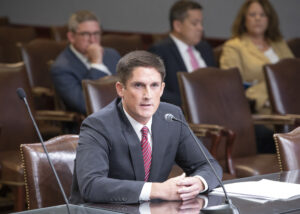
In his testimony on September 20, 2022 at the Pennsylvania House Environmental Resources and Energy Committee public hearing regarding “Wellhead to Stovetop – Conveying Energy in PA,” Babst Calland Attorney Keith Coyle, chair of the Marcellus Shale Coalition’s Pipeline Safety Workgroup, discussed the role and contribution of natural gas in the energy sector, and the importance of pipelines as a means of transporting natural gas from the wellhead to consumers. He urged the Committee to recognize the importance of the natural gas industry and offered thoughts on the policies that should be considered in securing Pennsylvania’s energy future.
He explained, “Policies that impose unnecessary barriers on natural gas production or that prohibit the installation of pipeline infrastructure will create an energy system that is far less secure, particularly in the short term. The basic needs of everyday Americans cannot be met if one-third of the country’s primary energy production is unavailable or cannot be safely and reliably delivered to consumers. Nor can the needs of the Commonwealth’s citizens be met without the natural gas that heats its homes and runs its power plants. As the recent developments in Europe show, policies that fail to account for the energy needs of a modern society are not progressive and often cause the greatest harm to those who are the most vulnerable.”
To view the live stream video of the House Environmental Resources & Energy Committee public hearing regarding “Wellhead to Stovetop – Conveying Energy in PA,” click here.
Legal Intelligencer
(by Janet Meub)
On March 19, 2020, in response to the worldwide spread of the novel coronavirus, Pennsylvania Governor Tom Wolf issued an Executive Order “…Regarding the Closure of All Businesses that are not Life Sustaining,” https://www.governor.pa.gov/wp-content/uploads/2020/03/20200319-TWW-COVID-19-business-closure-order.pdf. Many Pennsylvania workers were essentially locked out of the office. Governors throughout the U.S. issued similar orders, though what workers were deemed “essential” versus “non-essential” differed from state to state. Initially, attorneys in Pennsylvania were non-essential, but Ohio attorneys, for example, were essential! Gradually, businesses reopened, but not all employees returned to the office. We learned from the COVID-19 Pandemic that, for better or for worse, remote working in many employment contexts is here to stay.
Some professions and business models have been more adept at pivoting to remote work than others. Educators have been teaching cyber school and online college and graduate school classes for years. Telemedicine, once a novel way to reach patients in rural, underserved communities without access to hospitals or medical specialists, is now available to anyone with a computer or smart phone.
Many employers have reaped many benefits from remote working. Office space per square foot is no longer a concern with many employers declining to renew long-term, commercial leases. It has been widely reported that employees working from home are putting in longer hours and can be just as productive at home as they were in the office. There is no commute. Data entry at home is the same as data entry at the office – except without the overhead.
No change comes without challenge, however. Remote employment requires employers to re-examine how we manage and supervise employees. Take, for example, the legal profession. The Rules of Professional Conduct governing the legal profession require that “lawyers within a firm make a reasonable effort to establish internal policies and procedures designed to provide reasonable assurances that lawyers in their firm conform to the Model Rules of Professional Conduct. See, 5.1 Responsibilities of Partners, Managers and Supervisory Staff. Additionally, lawyers are responsible for their non-lawyer assistants and staff. Rule 5.3 of the Model Rules states, “Non-lawyers within the firm must be given instruction and supervision concerning ethical aspects of their employment.” Rule 1.0 (c) extends the definition of “law firm” to the legal department of a corporation or other organization. How does a supervising attorney ensure that associate attorneys and support staff are abiding by the rules of professional conduct in a strictly remote or hybrid remote workplace?
In the law firm setting, onboarding of new hires should include an overview of the ethical obligations of the employee. An experienced law firm administrator will review not only the firm’s healthcare benefits, 401K options, and paid time off policy, but he will also remind new attorneys and support staff of their duty to keep client information confidential when they are working away from the office. We hear people talking on their cellphones in elevators, in stores, and on public transportation daily. While many have no qualms discussing the most intimate details of their lives or medical conditions in the grocery store aisle, lawyers owe their clients the duty of confidentiality. Commenting on Facebook midafternoon, “Hope the XYZ deal closes soon, so I don’t miss Chelsea’s cheer team trip to Disney,” is problematic. Many remote-working parents have in-home childcare assistance. Caution should be taken when discussing client information around visitors to one’s home. Keeping sensitive paperwork and conversations regarding client business and legal issues behind one’s closed home office door is common sense, but are all employees compliant?
What can employers in any industry or field do to better manage their remote work force?
Communication
Whether it is the legal profession, a start-up company, a school district or an insurance company, communication through periodic teleconferences or Zoom meetings with departmental groups and/or staff is key to reinforcement of existing policies and education as to new policies and procedures. Virtual meeting fatigue has plagued our national psyche for the past two years. But in the remote environment, Zoom and Teams meetings are a necessary tool to ensure that remote-working supervisors and their direct reports are aware of the current company policies. Uniform application of policies is the goal. Are supervisors approving overtime in a consistent fashion department-wide? Are all supervisees aware of the changes to the company records tracking system?
A company intranet is another way to reach the remote employee. The intranet can be the repository for the employer’s policies and procedures, cafeteria and qualified transportation plan reimbursement forms, fringe benefit offerings, and employee resources. The intranet can also be used to make company-wide announcements, share news, introduce new hires, list possible conflicts of interest, and schedule meetings. Better informed employees are easier to manage.
Mentoring
When working from home, the opportunity to walk down the hallway to speak with a colleague about a perplexing issue is eliminated. Where you once ran into Larry from Underwriting reheating his coffee in the office kitchen, there is only your cat at home. One of the benefits of working in a legal department, law or accounting firm or department of a national corporation as opposed to being a sole proprietor/practitioner, has always been the ability to develop an informal or formal mentoring relationship with a more experienced colleague and learn from others. Brainstorming strategy with a partner or running an idea past your preceptor is invaluable assistance and a built-in safeguard against bad practices. Whether it is best for an employer to assign mentors or encourage employees to pick their own may depend on the nature of the business itself.
Working remotely can be isolating in any business or industry. The importance of establishing mentoring relationships is crucial to the success of any company, especially where the workforce is remote. Not every student is comfortable raising his hand in class. Not every employee is comfortable asking a question in a virtual meeting, exposing inexperience or ignorance on a particular subject to all meeting participants. It is incumbent upon managers and supervisors to create opportunities for employees to check in “one-on-one” to ask questions, seek help, or clarify an assignment. Frequent communication via telephone or virtual meetings fosters an atmosphere of collegiality, collaboration and sharing.
Supervision
With many companies doing away with a physical office all together, it is important to give remote workers the experience of meeting supervisors, managers, and co-workers in person. One is more inclined to pick up the phone to ask a supervisor a question or suggest a new idea if one has had a positive, in-person interaction with that colleague. Employee retention is something we hear about on the news every day. Establishing personal connections with co-workers makes one feel valued and a part of the larger organization. In addition to “one-on-one” meetings via telephone or Zoom, employers should try to have occasional “meet-ups” such as coffee, lunch or happy hour.
“Meeting” with one’s supervisor is less stressful when it is common occurrence. Whether it is a weekly ten (10) minute phone call or a Zoom meeting, touching base at regular intervals is a positive exercise. Company policies, procedures or goals for the project at hand can be addressed and confirmed. A remote employee who is a reluctant to ask questions in a group setting may be more comfortable seeking direction in this forum. Not all supervisors are effective communicators. Being able to reinforce a certain policy or confirm expectations for a particular assignment helps the supervisor and the supervisee. No one will get too far afield from the end goal if there is an open and frequent dialogue.
In the remote work setting, the onus is really on the managers and supervisors to stay actively involved in their direct report’s work – whether it is a bid proposal, a legal brief, or the final proof of a report headed to print. Out of sight can really be out of mind when we do not see each other on a daily basis. Obviously, keeping a regular employee review schedule is just as important in the supervision of remote workers as it is in the traditional office setting. Training one’s employees is not any less critical to the success of the organization when those employees are sitting in their home offices. In fact, managers and supervisors must give the training and educating of remote workers even more attention. Remote workers miss the on-the-job learning that comes from daily exposure to seasoned veterans in their fields in the traditional office setting.
Remote work is here to stay – probably one of the few good things to come from a global pandemic. Attending meetings, conferences, court hearings, concerts, and even church services virtually is certainly not the same experience as being there in person. But, remote work has allowed for many benefits for employers and employees alike. Employers who make the effort to effectively communicate, mentor and supervise remote workers will reap the benefits and ensure continued success in their organizations.
Janet Meub is senior counsel in the Litigation and Employment and Labor groups of Babst Calland. Ms. Meub has significant experience in the areas of employment and labor law, professional liability defense, insurance coverage and bad faith litigation, toxic tort litigation, nursing home negligence, and medical malpractice defense. She has a diversified practice that includes defending employers, healthcare providers, law enforcement and other professionals, and non-profits, at all levels of civil litigation through trial. Contact her at jmeub@babstcalland.com or 412-394-6506.
To view the full article, click here.
Reprinted with permission from the September 15, 2022 edition of The Legal Intelligencer© 2022 ALM Media Properties, LLC. All rights reserved.
Energy Alert
(by Austin Rogers and Robert Stonestreet)
On Wednesday, September 7, 2022, Judge John Preston Bailey of the federal District Court for the Northern District of West Virginia granted a motion to dismiss a lawsuit challenging the validity of Senate Bill 694, West Virginia’s new oil and gas unitization statute. The statute authorizes the West Virginia Oil and Gas Conservation Commission to issue orders authorizing certain oil and gas interests to be included in what are known as development units, even without the consent of the interest owner, under very narrow circumstances.
Plaintiffs, who owned mineral interests in property that could potentially be subject to the unitization procedure in SB 694, sought to prevent the statute from becoming effective by claiming that the law, among other things, allows the unconstitutional taking of private property without just compensation in violation of both the United States Constitution and the West Virginia Constitution. Plaintiffs also argued that the statute deprived them of due process in the taking of their property in violation of the Fifth and Fourteenth Amendment of the United States Constitution. The Court dismissed the challenge because (1) the plaintiffs lacked standing and (2) Governor Jim Justice, the sole defendant, has sovereign immunity under the Eleventh Amendment.
With respect to standing, the Court held that the plaintiffs failed to satisfy any of the three requirements: (1) an injury-in-fact; (2) that was traceable to the statute; and (3) that could be redressed by the Court. According to Judge Bailey, the plaintiffs did not suffer an injury in fact because their tract has not been unitized, and no operator has even applied to unitize their mineral tracts under SB 694. Second, the alleged injury is not traceable to the Governor’s conduct because the Governor has no power to enforce SB 694. Finally, plaintiffs failed to show that a favorable ruling against the Governor would provide any redress. To establish standing, a plaintiff must meet all three factors, but here plaintiffs failed to meet a single one.
The Court further held that, even if the plaintiffs had standing, sovereign immunity under the Eleventh Amendment shields the Governor from liability. In general, the Eleventh Amendment prevents states from being sued in federal court without their consent, and this includes state officials being sued in their official capacity. The exception to this general rule allows for suit against a state official when the state official has the ability to enforce the law in question. Here, the Court ruled that Governor Justice has no authority to enforce SB 694 because the law does not specifically allocate any authority to the Governor. Plaintiffs claim that the Governor has the general duty to ensure laws are faithfully executed, and by appointing members of the West Virginia Oil and Gas Conservation Commission, the Governor ensures the law is enforced. The Court pointed to numerous cases, however, which find that sovereign immunity cannot be overcome by (1) the Governor’s general duty to enforce the laws of a state; or (2) the appointment power enjoyed by a Governor.
While the Court dismissed the plaintiffs’ claims, it also granted plaintiffs leave to amend the Complaint by September 20, 2022. The plaintiffs indicated in the briefing on the Motion to Dismiss that they intended to include the West Virginia Oil and Gas Conservation Commission as a defendant. So we anticipate that a new challenge to SB 694 will be filed that names the Commission as a defendant. Plaintiffs also indicated in briefing that they do in fact own unitized mineral interests. Naming the Commission as a defendant coupled with identifying the plaintiffs’ unitized mineral interests will likely overcome the grounds for dismissal cited by the Court in its order.
Please contact either of the following attorneys to learn more: Austin Rogers at arogers@babstcalland.com or 681.265.1368 or Robert Stonestreet at rstonestreet@babstcalland.com or 681.265.1364.
Click here for PDF.
PIOGA Press
(By Lisa Bruderly)
Why is the WOTUS Definition Important?
This article is an excerpt of The 2022 Babst Calland Report, which represents the legal perspective of Babst Calland’s energy attorneys addressing the most current business and regulatory issues facing the energy industry. To view the full report, go to reports.babstcalland.com/energy2022-2.
Compliance with federal permitting associated with disturbances to streams and wetlands can be a challenge for large and small pipeline projects, causing delays and increased expenses. The extent of required federal permitting is largely dependent on the definition of “waters of the United States” (WOTUS), which determines federal jurisdiction under the Clean Water Act (CWA).
The definition of WOTUS must be considered anytime there is earth disturbance that may impact a stream or wetland. For example, pipeline construction requires U.S. Army Corps of Engineers (Corps) permitting for impacts from crossing, or otherwise disturbing, federally regulated streams and wetlands. Note that the WOTUS definition is included in 11 federal regulations and affects, not only federal permitting for impacts to regulated streams and wetlands (i.e., Section 404 permitting), but also the applicability of NPDES permitting requirements, federal spill reporting and SPCC plans.
Why is the WOTUS Definition Controversial?
The definition of WOTUS has been hotly contested and frequently changed for more than a decade. Presidents Obama, Trump and Biden have all proposed their own definitions, which largely reflected their agendas for more, or less, stringent regulation. The current definition is actually the definition that was in place prior to the Obama administration. The Corps and U.S. Environmental Protection Agency (USEPA) reverted back to this definition when President Trump’s Navigable Waters Protection Rule (NWPR) was vacated by the U.S. District Court for the District of Arizona in August of 2021.
Frequent changes to the WOTUS definition create uncertainty for the energy industry in trying to identify, avoid and/or mitigate impacts to WOTUS. When the definition changes, a Section 404 permit applicant must reevaluate a project’s impacts under the new definition. This may require adjustments in the type of permit needed, the time it takes to get the permit or the level of public input.
Much of the controversy surrounding the WOTUS definition relates to the two tests identified in the U.S. Supreme Court’s Rapanos v. United States decision. Justice Antonin Scalia issued the plurality opinion in Rapanos, holding that WOTUS would include only “relatively permanent, standing or continuously flowing bodies of water” connected to traditional navigable waters, and to “wetlands with a continuous surface connection to such relatively permanent waters.” Justice Anthony Kennedy, however, advanced a broader interpretation of WOTUS in his concurring opinion, which was based on the concept of a “significant nexus,” meaning that wetlands should be considered as WOTUS “if the wet-lands, either alone or in combination with similarly situated lands in the region, significantly affect the chemical, physical, and biological integrity of other covered water.”
In 2022, the on-going debate will continue over the definition of WOTUS. Notably, both the executive and judicial branches of the federal government are expected to weigh in on this definition, without any guarantee that their interpretations will be consistent or that the resulting definition of WOTUS will be any more certain than the current definition.
What Regulatory Changes to the WOTUS Definition Are Proposed?
USEPA and the Corps have already taken the first step to revise the WOTUS definition, as promised by President Biden during his presidential campaign, by publishing a proposed definition in a December 7, 2021 rulemaking (Rule 1). While this proposed definition is similar to the pre-2015 definition of WOTUS, which is currently in effect, it also reflects relevant Supreme Court decisions (e.g., Rapanos) that occurred in the early 2000s.
If promulgated, the December 2021 proposed WOTUS definition would incorporate Justice Kennedy’s significant nexus test into the regulations. Practically speaking, however, the impact is not expected to be significant because, in interpreting the current definition of WOTUS, the Corps has already largely been relying on its 2008 guidance, which reflects Justice Kennedy’s significant nexus concept.
A more expansive definition of WOTUS is expected when the Biden administration unveils its second proposed WOTUS rulemaking (Rule 2), planned for publication later this year or early next year. While the language of Rule 2 is yet unknown, as stated in the Fall 2021 Unified Agenda, Rule 2 is expected to reflect “additional stakeholder engagement and implementation considerations, scientific developments, and environmental justice values. This effort will also be informed by the experience of implementing the pre-2015 rule, the 2015 Clean Water Rule, and the 2020 Navigable Waters Protection Rule.”
Also, last month, USEPA’s Science Advisory Board announced that it would be reviewing the proposed rule in light of “important emerging environmental issues,” such as the effects of climate change, whether subsurface water should be included in the definition and the potential impact on EJ areas.
The practical effect of identifying federally-regulated waters based on concepts such as environmental justice and climate change is uncertain. The spotlight on these issues could result in a new WOTUS definition that encompasses many more waters and requires more public engagement for specific projects requiring Corps permitting.
How will the U.S. Supreme Court Weigh in on the WOTUS Definition for Wetlands?
In addition to the Biden administration’s proposed changes to the WOTUS definition, in January 2022, the U.S. Supreme Court signaled that it would weigh in on the WOTUS debate for the first time since 2006, when it agreed to hear the case of Sackett v. USEPA. In Sackett, landowners in Idaho have had a long-standing challenge to an administrative order issued against them for allegedly filling wetlands without a permit. The Sacketts assert that Justice Kennedy’s significant nexus test in Rapanos is not the appropriate test to delineate wetlands as WOTUS, and that, under the test identified by Justice Scalia, the wetlands on their property are not WOTUS.
In 2021, the Ninth Circuit ruled against the Sacketts’ position and held that the “significant nexus” test in the Kennedy concurrence was the controlling opinion from Rapanos. The Sacketts petitioned the U.S. Supreme Court to consider whether Rapanos should be revisited to adopt the plurality’s test for wetland jurisdiction under the CWA. However, the Court, instead, will consider the narrow issue of whether the Ninth Circuit “set forth the proper test for determining whether wetlands are ‘waters of the United States.’”
Many believe the 6-3 conservative majority of the Supreme Court could assert a more narrow interpretation of WOTUS, which would give more discretion to the states. Oral arguments are expected this fall.
What to Watch for in 2022?
The regulatory and judicial developments discussed above set up a potential conflict, where a new (likely more expansive) regulatory definition of WOTUS and a Supreme Court opinion that likely narrows the meaning of WOTUS occur in the same general timeframe.
Pipeline developers and others in the energy industry should watch these developments so that they understand how the WOTUS definition may change and how it may affect their permitting strategies.
Reprinted with permission from the September 2022 issue of The PIOGA Press. All rights reserved.
For the full article, click here.
For the PDF, click here.
Attorneys Susanna Bagdasarova and Joseph A. Pope recently joined Babst Calland.
Susanna Bagdasarova joins the Corporate and Commercial and Emerging Technologies groups as an associate. She represents business clients in connection with a broad range of general corporate and commercial law matters, including entity formation, corporate structuring, corporate governance, commercial contracts, and mergers and acquisitions, with a focus on the technology sector. Prior to joining Babst Calland, Ms. Bagdasarova was an associate with Jones Day. She graduated summa cum laude from The Pennsylvania State University, The Dickinson School of Law in 2015.
Joseph Pope joins the Corporate and Commercial Group as senior counsel. Mr. Pope’s practice focuses on corporate and transactional matters, including corporate and commercial finance transactions, with a particular focus on transactions involving commercial real estate. Prior to joining Babst Calland, he was a senior attorney with Hergenroeder Rega Ewing & Kennedy. Mr. Pope graduated cum laude from the University of Pittsburgh School of Law in 2008.
Smart Business
(By Sue Ostrowski featuring Peter Schnore)
Commercial property owners in Allegheny County may be able to significantly reduce their real estate tax assessments — and their property taxes — in 2023.
“Real estate taxes are nearly always the largest operating expense for an income-producing property, and an important development in the calculation of the Common Level Ratio for Allegheny County presents a golden opportunity to reduce property taxes,” says Peter Schnore, Shareholder at Babst Calland.
Smart Business spoke with Schnore about what has changed in the assessment ratio, and how commercial property owners can take steps to reduce their property taxes.
What change is impacting commercial Allegheny County property owners?
The Pennsylvania State Tax Equalization Board recently published the Common Level Ratios (CLR) to be used in evaluating the merits of Pennsylvania tax assessment appeals for the 2023 tax year.
The CLR for Allegheny County has dropped significantly since its publication by the state last year — from 81.1 percent to 63.6 percent. This means that if a property was accurately assessed for 2022, all else equal, it will be overassessed by about 27 percent for Tax Year 2023.
A recent court challenge to the 2022 CLR’s calculation, which remains ongoing at the time of publication, appears to have led to the dramatic drop in the CLR for Allegheny County.
What can property owners do to take advantage of this opportunity?
Property owners should find an attorney who is familiar with this area of the law to help them gather evidence to present a strong case for proof of the property’s fair market value.
Allegheny County property owners might also estimate what their property is worth as of Jan. 1, 2023, and multiply that by the 2023 CLR of 63.6 percent to get a sense as to what the property’s assessment could be following an appeal.
If the owner arrives at an estimate that’s less than the property’s current assessment, then a cost-benefit-risk analysis may lead to the conclusion that an appeal is well worth the effort, particularly in light of the fact that the assessment reduction (and resulting tax reduction) may be enjoyed for many years to come, as there is no regularly scheduled countywide reassessment in Allegheny County, or in nearly all of Pennsylvania’s counties.
For reference, assuming an annual tax rate of 3 percent of the assessment, a reduction of 27 percent on a property currently assessed at $10 million would result in annual tax savings of about $81,000.
Annual assessment appeals in Allegheny County must be filed between Jan. 1, 2023, and March 31, 2023, for the 2023 Tax Year. If the owner can present good, clear evidence of the property’s fair market value as of Jan. 1, 2023, a favorable ruling may be made in a matter of months through a favorable decision from the Board of Property Assessment Appeals and Review.
A number of cases require additional time and effort, however, as the taxing jurisdictions can bring their own evidence of the property’s value and put up a fight.
What is the role of an attorney in filing an appeal?
An attorney experienced in Pennsylvania assessment and property valuation law and procedure can help evaluate the merits of an assessment appeal. This may include identifying and working with the appropriate appraiser to provide an opinion of the property’s fair market value and advising the owner whether it makes sense from a financial perspective to file an appeal.
Many attorneys will agree to represent owners on a contingent fee basis, where the fee is a percentage of any taxes saved as a result of an assessment reduction.
For the full article, click here.
For the PDF, click here.
Environmental Alert
(By Matthew Wood and Mackenzie Moyer)
On August 26, 2022, the U.S. Environmental Protection Agency (EPA) issued a pre-publication version of its Proposed Rule which would designate two PFAS chemicals as “hazardous substances” under the Comprehensive Environmental Response, Compensation, and Liability Act (CERCLA), commonly known as Superfund (Proposed Rule). Specifically, the Proposed Rule would list perfluorooctanoic acid (PFOA) and perfluorooctanesulfonic acid (PFOS) – the two most common and well-studied PFAS – and their salts and isomers as hazardous substances under CERCLA. This is the first time EPA is making such designations by exercising its authority under CERCLA Section 102, 42 U.S.C. § 9602. Until now, CERCLA has always defined hazardous substances by reference to other statutes (e.g., the Clean Water Act and the Resource Conservation and Recovery Act).
In the Proposed Rule, EPA identified five broad categories of potentially affected entities: (1) PFOA/PFOS manufacturers (including importers and importers of articles); (2) PFOA/PFOS processors; (3) manufacturers of products containing PFOA/PFOS; (4) downstream product manufacturers and users of PFOA/PFOS products; and (5) waste management and wastewater treatment facilities. Potentially affected industries include aviation operations, chemical manufacturing, firefighting foam manufacturers, fire departments and training facilities, polymer manufacturers, and waste management and remediation services.
In the lead-up to issuance of the Proposed Rule, certain entities, such as drinking water utilities, wastewater utilities, and landfill operators, expressed concerns that they could face significant new liabilities for contamination originating from others. In its accompanying announcement, EPA said, without identifying specific industries, that it is “focused on holding responsible those who have manufactured and released significant amounts of PFOA and PFOS into the environment” and intends to use its “enforcement discretion” to “ensure fairness for minor parties who may have been inadvertently impacted by the contamination.” EPA further said that it will continue to engage with impacted communities, wastewater utilities, businesses, farmers, and other parties throughout the consideration of the Proposed Rule.
If finalized, the Proposed Rule will immediately require parties to report to federal, state, tribal, and local authorities, as applicable, releases of PFOA and/or PFOS of one pound or more within a 24-hour period. The Proposed Rule also requires federal agencies to meet the property transfer requirements enumerated in CERCLA § 120(h), 42 U.S.C. § 9620(h), when selling and transferring federally-owned real property. This includes providing notice if PFOA/PFOS (or any other hazardous substance) was stored on-site for a year or more and/or was released or disposed of on-site, in addition to warranting in the property’s deed that remediation has been completed prior to the transfer (and any further necessary remediation will be completed by the United States). Finally, the Department of Transportation will have to list and regulate PFOA and PFOS as hazardous materials under the Hazardous Materials Transportation Act.
More broadly, the federal government is currently limited in how it can respond to PFOA/PFOS contamination in the environment. That is, it may be authorized to clean up PFOA/PFOS when it finds an imminent and substantial danger to public health or welfare. If the Proposed Rule is finalized as written, however, EPA and other agencies with delegated CERCLA authority could have additional remedial options, including to: (1) respond to PFOA/PFOS releases without making an imminent and substantial danger finding; (2) require potentially responsible parties (PRPs) to clean up PFOA/PFOS contamination; and (3) recover cleanup costs from PRPs. Private parties who conduct cleanups consistent with the National Contingency Plan could also recover cleanup costs from other PRPs. Among other things, EPA believes that the Proposed Rule will increase transparency with respect to the scope of PFOA/PFOS releases and allow the government to conduct faster cleanups.
The Proposed Rule’s costs have been targeted by industry stakeholders and for further analysis by the Office of Management and Budget (OMB). Earlier this year, OMB designated the rule as “other significant,” meaning the direct costs of the rule – the reporting requirements – were not expected to exceed more than $100 million. On August 12, 2022, OMB redesignated the rule as “economically significant,” i.e., the rule is expected to impose costs of $100 million or more annually, which requires EPA to conduct a more robust cost-benefit analysis of the indirect and direct costs of the Proposed Rule and issue a regulatory impact analysis (RIA). EPA has not yet issued the RIA, but stakeholders concerned about the Proposed Rule’s costs have conducted their own analyses. For example, a study by the U.S. Chamber of Commerce found that private sector cleanup costs at Superfund sites could cost between $700-800 million a year.
Announcement of the Proposed Rule comes on the heels of EPA’s June 2022 release of interim updated drinking water health advisories for PFOA and PFOS, which are non-regulatory thresholds below which adverse health effects are not expected to occur. EPA lowered the health advisories from 70 parts per trillion (ppt) combined for PFOA and PFOS to 0.004 ppt for PFOA and 0.02 ppt for PFOS. EPA also issued final health advisories for Hexafluoropropylene Oxide (HFPO) Dimer Acid and its Ammonium Salt (GenX chemicals; 10 ppt) and Perfluorobutane Sulfonic Acid and its Potassium Salt (PFBS; 2,000 ppt).
The Proposed Rule will be published in the Federal Register within the next several weeks, which will start the 60-day public comment period. At the close of the public comment period, EPA also anticipates issuing an Advance Notice of Proposed Rulemaking seeking input on designating other PFAS chemicals as CERCLA hazardous substances.
The Proposed Rule is one of many goals EPA set for addressing all stages of the PFAS lifecycle, as further detailed in the agency’s “PFAS Strategic Roadmap: EPA’s Commitments to Action 2021-2024,” available here. As the federal and state governments take action to address PFAS, Babst Calland attorneys will continue to track these developments and are available to assist you with PFAS-related matters (including preparing and submitting comments on the Proposed Rule). For more information on this development and other remediation matters, please contact Matthew C. Wood at (412) 394-6583 or mwood@babstcalland.com, Mackenzie M. Moyer at (412) 394-6578 or mmoyer@babstcalland.com, or any of our other environmental attorneys.
Click here for PDF.
Attorney Alex Farone who is also the Co-Chair of the Allegheny County Bar Association’s Communications Committee of the Young Lawyer’s Division and the Editor and Chief of its “Point of Law” Newsletter led the newsletter to receive a 2022 American Bar Association Award of Achievement. This award is presented to projects submitted by local, state and national ABA YLD Affiliates for well-planned, and executed, programs that contribute significantly to the public and the betterment of the legal profession. Recognition is determined by a jury of their peers.
View the “Point of Law” Newsletter, here.
View the Spring 2022 issue, here.